
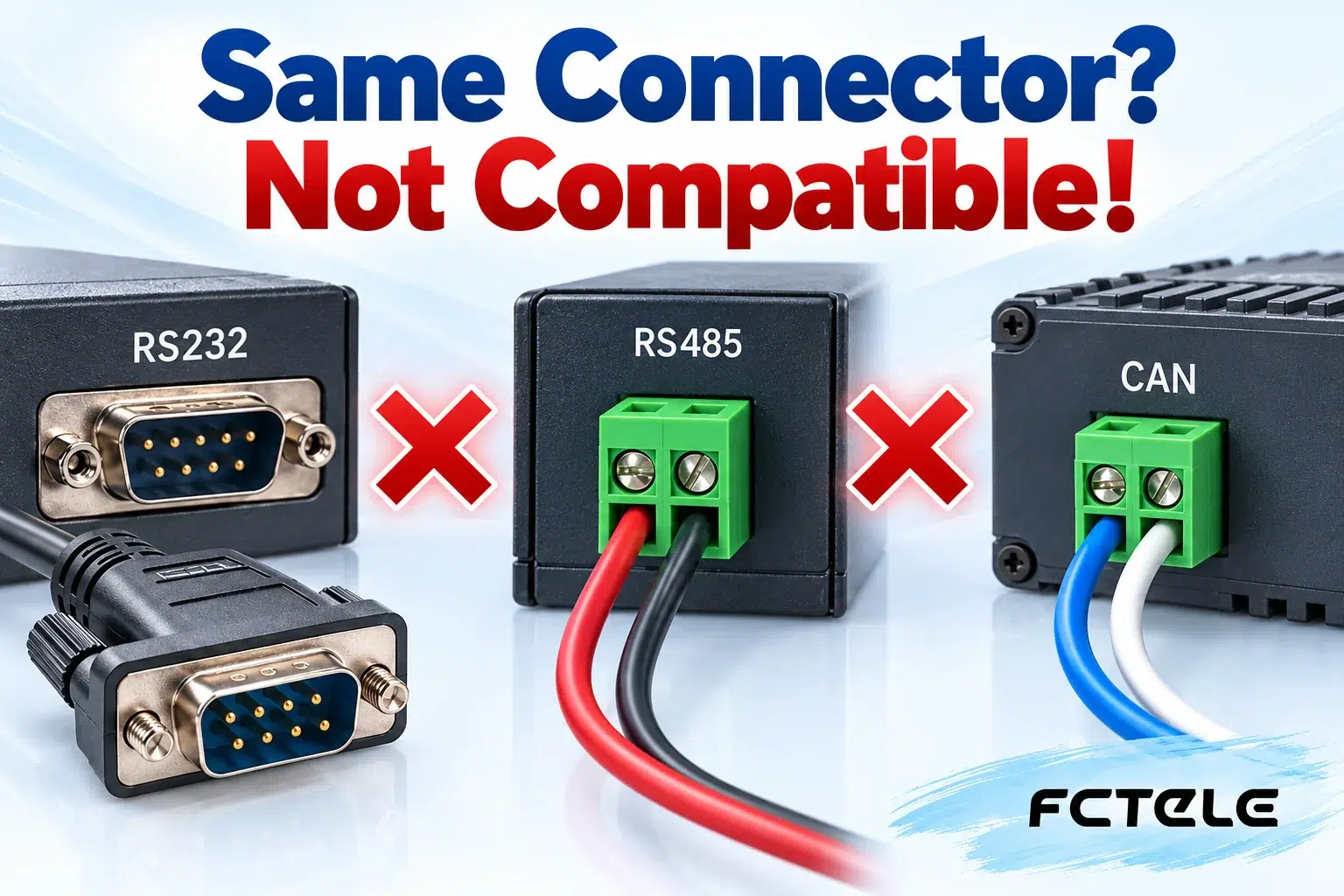
CAN, RS-485 and RS-232
RS232 vs RS485 vs CAN: Electrical Interfaces, Buses, and Arbitration
Check electrical interfaces, message formats and how nodes share the bus.
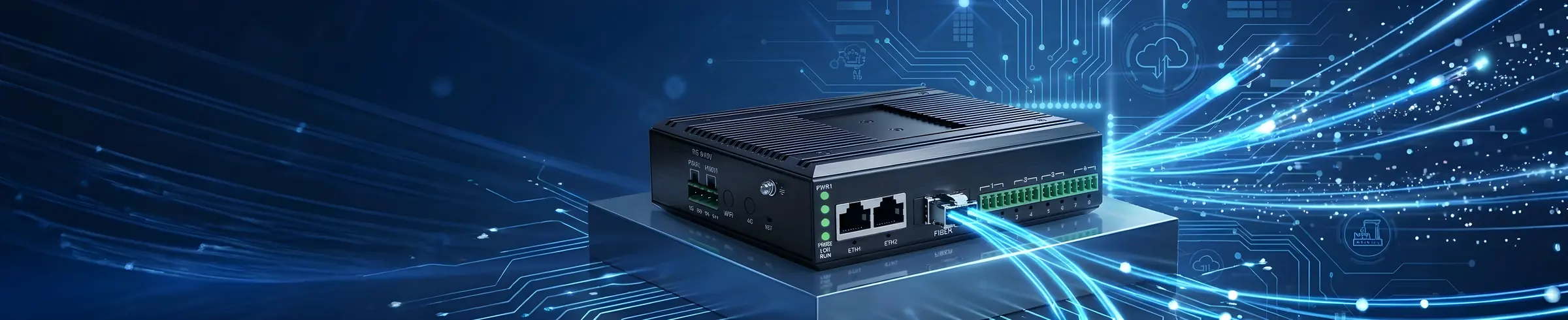
The dual-channel front panel shows CAN 1, CAN 2, 10/100 Mbps RJ45 and PWR/RUN/S1/S2 LEDs. Use the marked CANH, CANL and GND terminals.
The low-voltage version uses two 9–70 V DC inputs through the 4-pin PWR1/PWR2 terminal block.
The built-in version uses a 3-pin cloverleaf inlet for 85–265 V AC or 110–300 V DC.
Use the rear clip on a 35 mm DIN rail. The wall-mount installation uses mounting bars.
Low-voltage terminal version shown. 110 × 86 × 40.0 mm (L × W × H), 0.495 kg per unit.
| Item | Specification |
|---|---|
| Processor and LAN | ARM Cortex-M4 at 240 MHz. One RJ45 10/100BASE-T(X) port with full/half-duplex auto-negotiation, Auto MDI/MDIX and a 4,096-address MAC table. |
| CAN terminals | N1 has one CAN channel. N2 has two. 3.81 mm terminals carry CANH, CANL and GND. |
| Rates and frames | Up to 1 Mbps with automatic baud scanning and selectable custom rates. CAN 1.0 and CAN 2.0, 2.0A standard and 2.0B extended frames, ISO/DIS 11898. |
| Message handling | Up to 8,000 transmitted and 14,000 received frames per second. Receive timestamp accuracy up to 1 μs. |
| Transmission modes | Transparent conversion, transparent transmission with metadata and relay. CAN data framing is configurable. |
| Item | Specification |
|---|---|
| Modes and sessions | Modbus TCP, TCP server/client and UDP server/client. Up to four TCP or UDP sessions per CAN channel. Standard TCP/IP socket access. |
| Network protocols | TCP, UDP, ARP, ICMP, HTTP, DNS, DHCP and SNMP. Supports routed networks. |
| Configuration | Web and Windows tool configuration, access control, CAN status and parameter monitoring, SNMP and local or remote firmware upgrades. |
| Item | Specification |
|---|---|
| CAN protection | 6 kV surge protection and 3 kV optical signal isolation per CAN channel. Independent shield ground and 3 kV DC-DC isolation per channel. Industrial Class 4 EMC. |
| Enclosure and mounting | Fanless IP40 anodized aluminum enclosure, 35 mm DIN rail or wall mounting. |
| Environment | Operating/storage −40 to +85 °C, 0–95% operating RH without condensation. |
| Reliability | MTBF >100,000 hours. 100% burn-in testing. |
| Item | Low-Voltage Terminal | Built-In Wide Input |
|---|---|---|
| Supply input | Dual redundant 9–70 V DC | 85–265 V AC or 110–300 V DC |
| Inlet | 4-pin 5.08 mm PWR1/PWR2 plug-in terminal | 3-pin cloverleaf inlet |
| Protection | Isolation, overload and reverse connection protection. Automatic polarity detection. | Overload protection |
| Consumption | <5 W | <5 W |
Connect the axis controller to CAN 1 and field I/O to CAN 2. Terminal 1 is CAN-H and Terminal 2 is CAN-L for each channel in the example. The acquisition PC opens a TCP socket to the server and parses the field protocol. Choose N1 for one bus.
Specify all three choices when ordering.
| Ordering Model | Configuration |
|---|---|
| FCT-1300-N1 | 1 CAN channel, one 10/100 Mbps RJ45 port |
| FCT-1300-N2 | 2 CAN channels, one 10/100 Mbps RJ45 port |
Use FCT-1300-N1 for one CAN bus and FCT-1300-N2 for two. Both have one 10/100 Mbps RJ45 Ethernet port.
The server supports CAN 2.0A standard frames and CAN 2.0B extended frames.
Each CAN channel supports up to four TCP or UDP sessions.
The low-voltage version has dual 9–70 V DC terminals. The built-in version has a cloverleaf inlet for 85–265 V AC or 110–300 V DC.
Use the rear clip for a 35 mm DIN rail or order the wall-mount hardware.
Check electrical interfaces, message formats and how nodes share the bus.
Understand how wire bits and decoded frames relate when comparing captures.
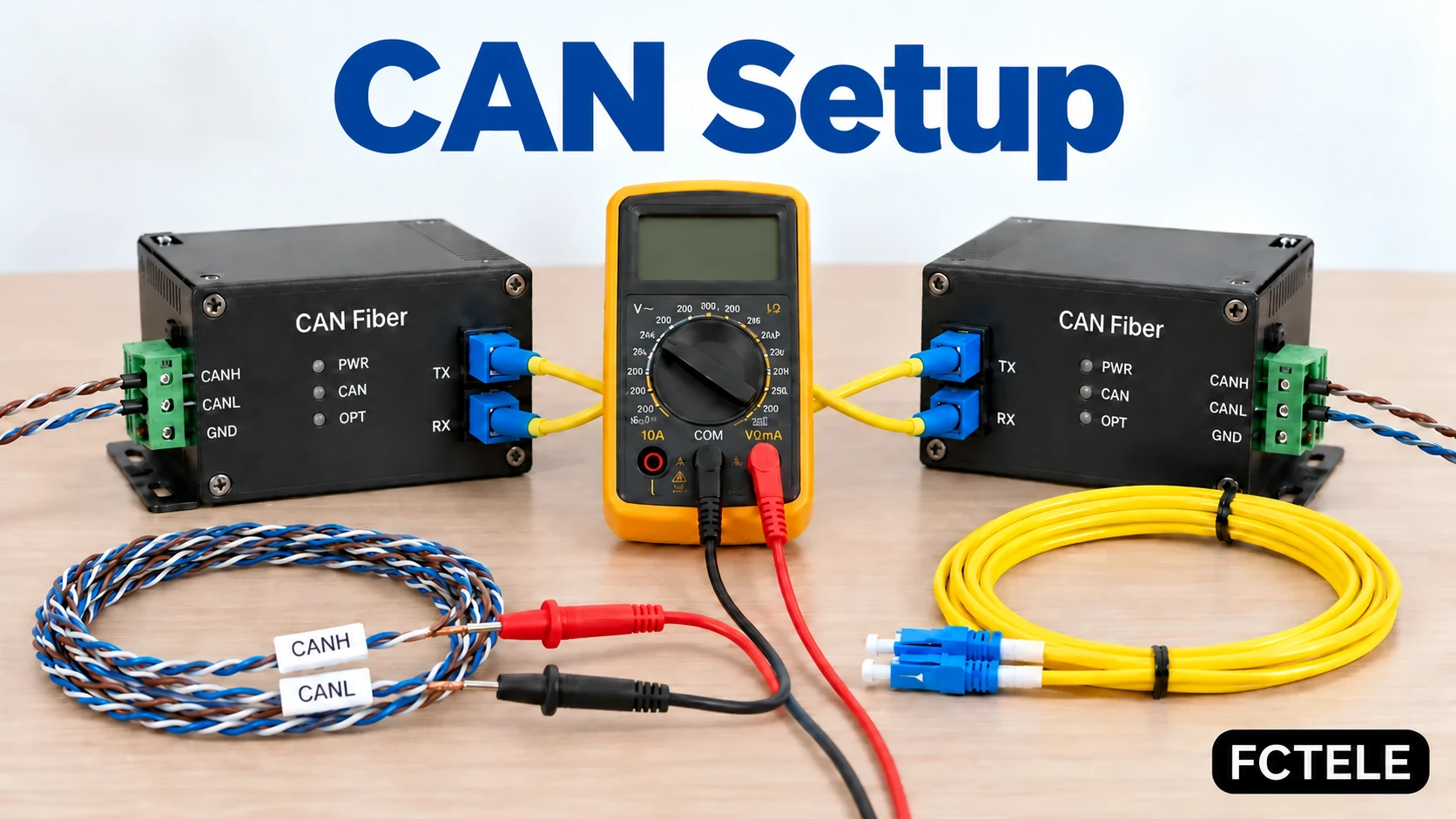
Use known-good wiring and verify the local CAN segment and bitrate before tracing the transport link.
Tell us your application, quantity and preferred configuration.
