


fiber optic transmission devices can be classified by service signal, transmission direction, fiber configuration, and deployment structure. Video, telephone, audio, serial port, and Ethernet require different interface processing; single fiber does not mean unidirectional, and rackmount does not necessarily mean larger service capacity. The purpose of classification is to find a solution that matches the terminal, not just to memorize product names.
Understanding by service signal is the most intuitive
Video fiber optic transmission devices face specific video formats, telephone fiber optic transmission devices face voice and signaling, audio equipment faces corresponding analog or digital audio, serial port equipment faces serial data, and Ethernet products face network links. The same name “fiber optic transmission device” does not mean it can handle all of the above services.
Video also needs to be further divided into analog, SDI, HDMI, or IP formats; serial ports need to specify the electrical interface and communication configuration. Terminal interfaces differ, so the processing circuits and supporting methods also differ. You cannot treat it as completing signal conversion just because you changed the connector so it can be plugged in.
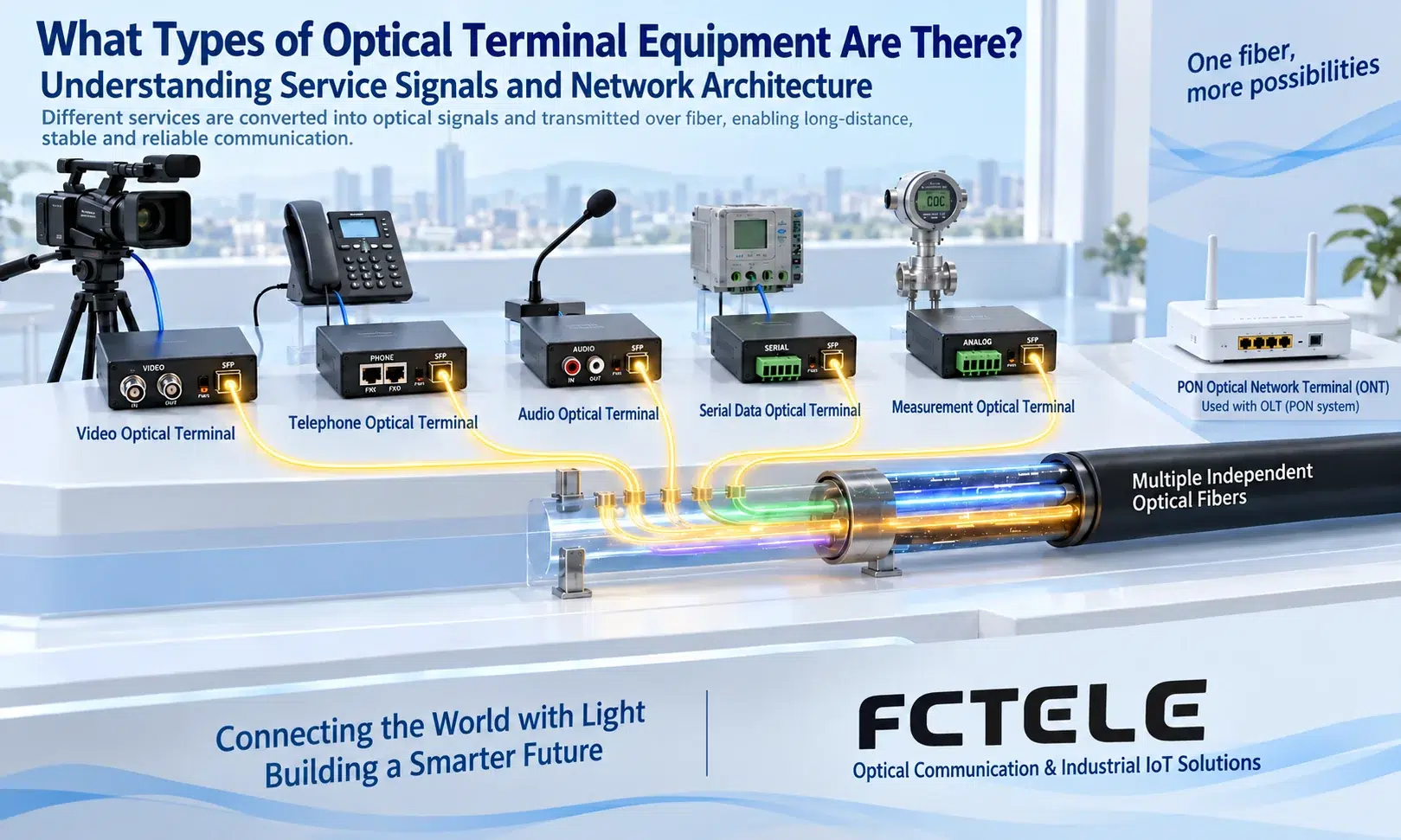
Unidirectional, bidirectional, and multi-service are not the same dimension
A unidirectional video link may have a clear transmitter and receiver, while bidirectional data equipment often transmits and receives at the same time. Some equipment also has a reverse control channel while transmitting video, so the “transmitter” may still receive some kind of auxiliary service. Direction should be described channel by channel.
Multi-service products arrange different signals into corresponding channels or multiplexing mechanisms, and capacity and clocking need to be checked. The simultaneous presence of multiple interfaces does not guarantee that all interfaces can operate simultaneously in all maximum modes; acceptance should be tested according to the planned concurrent combination.
Single fiber, dual fiber, and fiber type each match separately
Single-fiber BiDi uses different wavelengths to carry two directions, and the transmit and receive at the two ends are complementary; dual-fiber solutions often arrange TX and RX separately and need to be correctly crossed. Single-mode and multimode are fiber transmission conditions, and they are not classifications that replace single fiber and dual fiber.
Wavelength, optical standard, power range, and on-site loss together determine the link. Two products marked with the same distance may still be incompatible. Pluggable modules also need to be checked for host support, while fixed optical ports should be matched according to their existing configuration; you cannot arbitrarily change jumpers to change the internal optical capability.
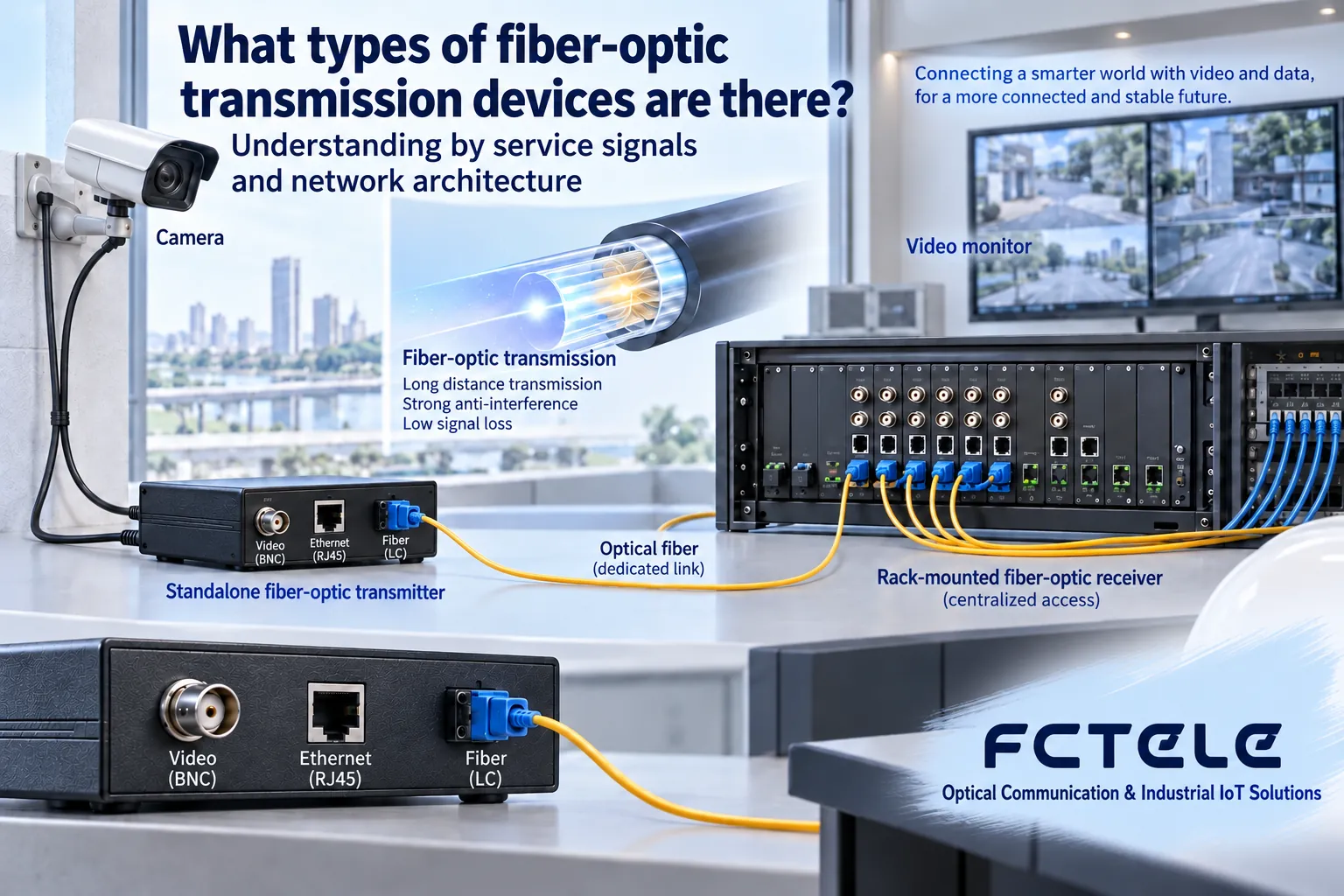
What are the advantages of box-type and rackmount-type?
Box-type is suitable for distributed installation and independent maintenance, while rackmount-type facilitates centralized access and power management. The rack backplane, power supply, or management module may affect multiple services; box-type equipment also needs to consider distributed power, space, and spare parts. Neither form is inherently more reliable.
Topologies such as point-to-point and ring also need to distinguish service paths and redundancy mechanisms. Installing equipment in a ring does not mean it automatically has protection; protocols and roles, backup paths, and fault recovery must be clear, and capability cannot be inferred from the shape of the wiring.
Do not treat carrier optical modems as the same kind of substitute
PON optical modems usually handle specific access standards and carrier authentication, while ordinary point-to-point Ethernet fiber media converters do not have the same responsibilities. Both can show optical interfaces, but that does not mean they can be interchanged. When a network already exists on site, the peer equipment and access method should be confirmed first.
Telephone and serial port products also cannot be directly used as ordinary network transceivers. Interface roles, data encapsulation, and application protocols each have requirements; when encountering advertising that says “can convert to optical,” you should continue to ask exactly what signal it accepts, what interface it restores, and which configurations it supports.
Complete requirements: Classification names should ultimately be tied to interfaces, media, and acceptance.
Fill in the service format, equipment at both ends, number of channels and direction, fiber type, core count, and length, then fill in power supply installation and reliability goals. In this way, you can proceed from Product Center enter the corresponding category, and use specific model information to verify compatibility.
For video, check the real picture and continuous recording; for telephone, check the full call process; for serial port, check real command responses and recovery. Correct classification is only the starting point for selection; end-to-end service acceptance is what shows whether the solution meets the requirements, and it cannot be replaced by a light being on or a single short test.
Translated from the Chinese technical article. Source first published: 2019-07-18. Source last revised: 2026-10-13T23:07:12+08:00. Read the Chinese source
