What Is the Smart Rock Project? System Architecture from Sensing and Transmission to Command Coordination
Views: 10Original by FCTELAuthor: FCTEL Technical Team
Quick answer:What Is the Smart Rock Project? System Architecture from Sensing and Transmission to Command Coordination
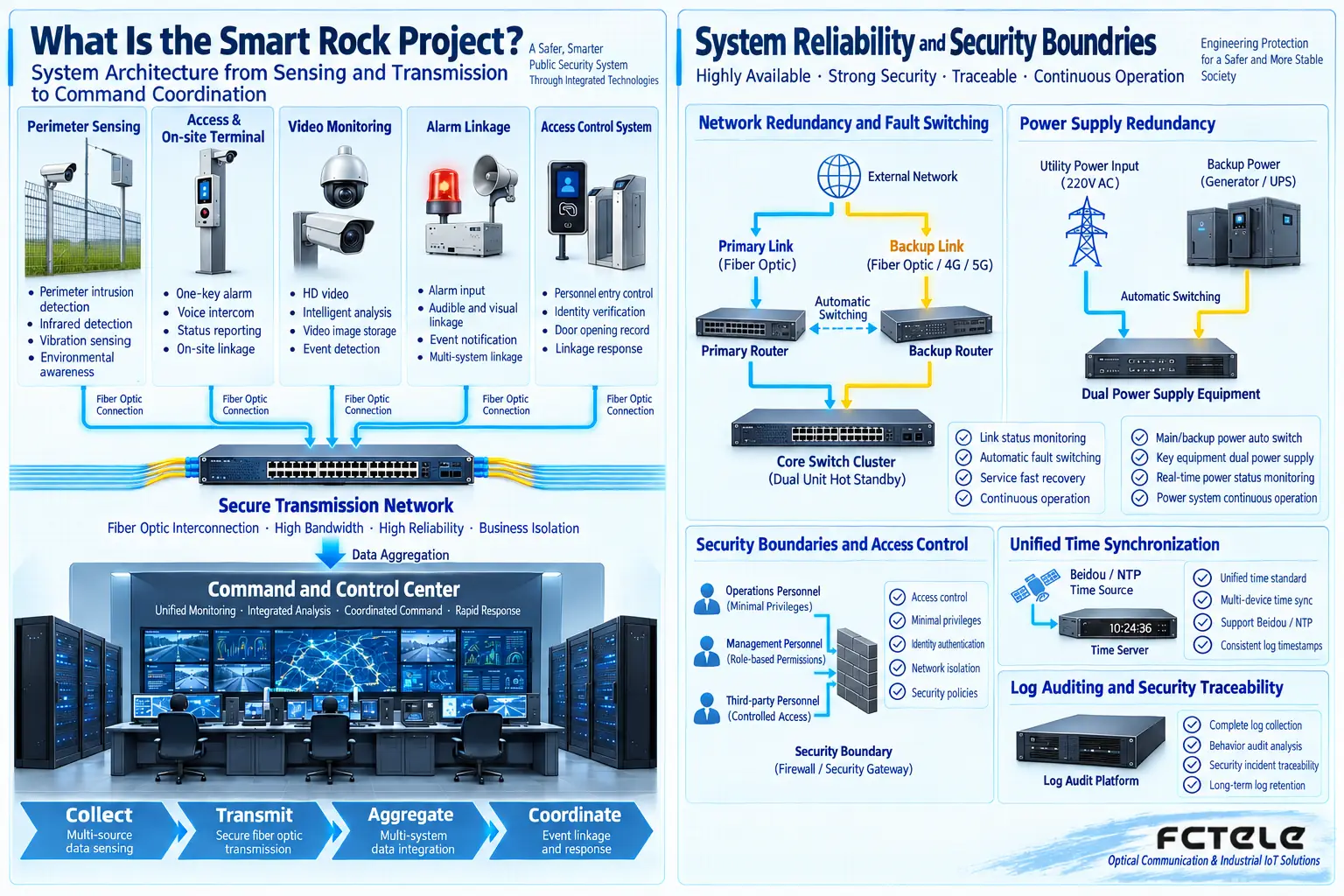
Conclusion first: The Smart Rock Project can be understood as a multi-system integration approach for protecting important sites: front-end sensing devices collect status, the secure transmission network reliably delivers video, alarm, and control data to the platform, and the command center performs unified display, assessment, and coordinated response. This article only discusses publicly available general technical architecture and does not involve specific site defense layouts, weaknesses, or operational procedures.
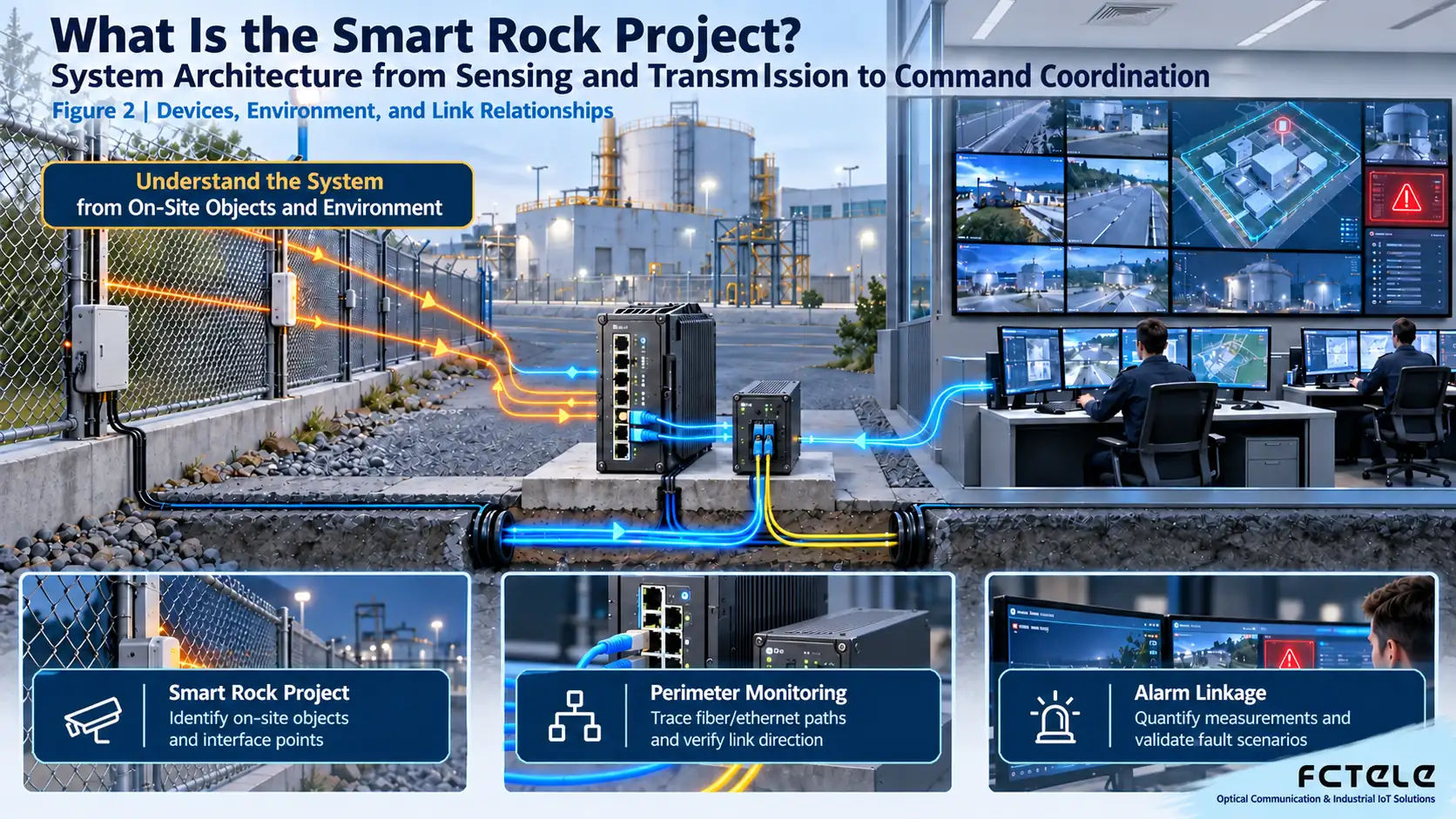
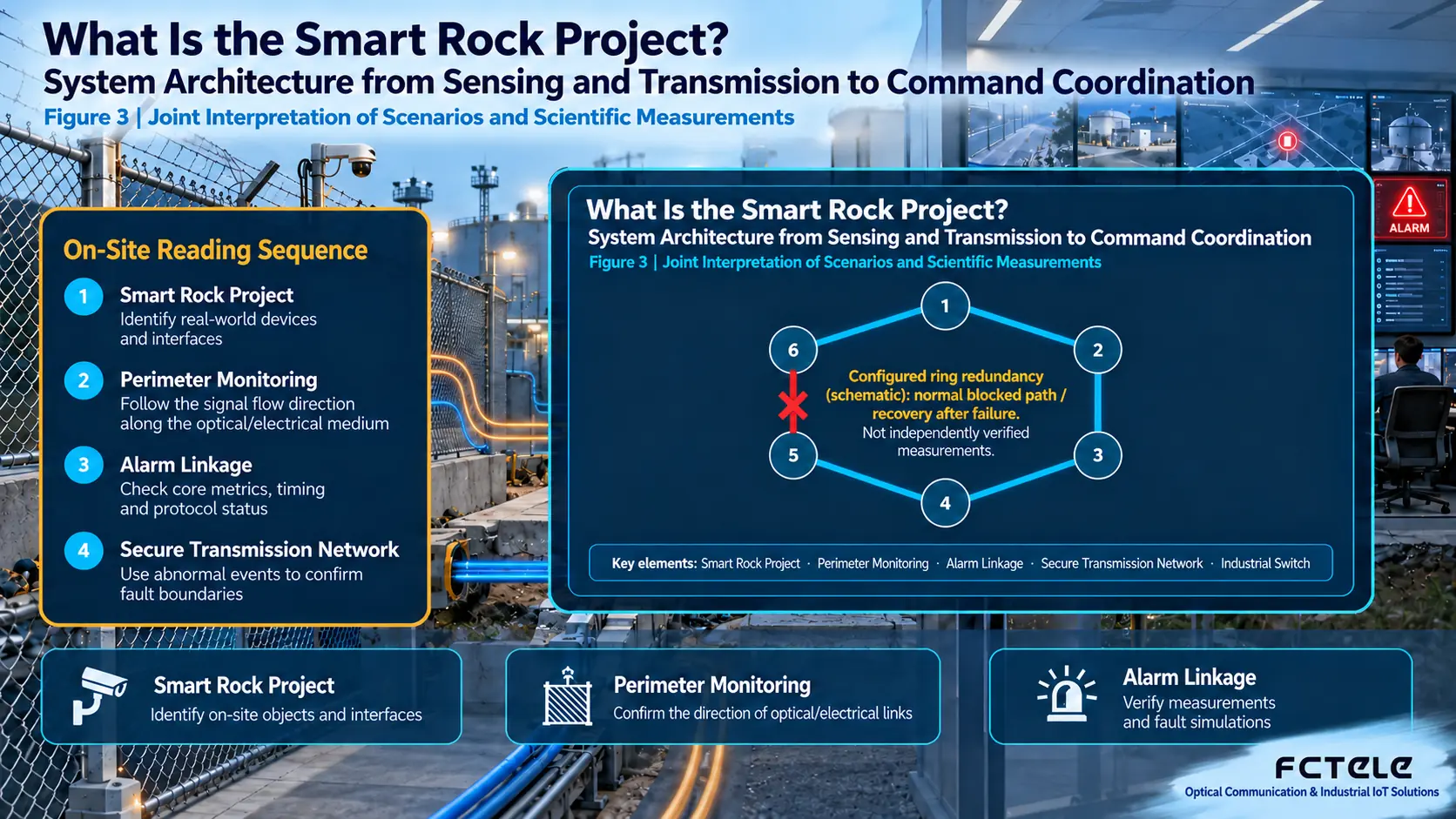
How to read the diagrams: This article centers on “What Is the Smart Rock Project? System Architecture from Sensing and Transmission to Command Coordination” and uses “What are the physical objects and system boundaries of the Smart Rock Project” and “What Is the Smart Rock Project: the role of the Smart Rock Project in the link” to organize the diagrams. When reading, first confirm the Smart Rock Project along the signal or status direction, then use perimeter monitoring to check the boundary, and finally trace abnormal phenomena back to the specific interface, medium, or protocol layer.
Figure 1: Core principles, boundaries, and signal paths corresponding to Part One of the main textFigure 2: Relationships among devices, environment, and linksFigure 3: Combined interpretation of scenarios and scientific measurements
1. What Are the Physical Objects and System Boundaries of the Smart Rock Project
The value of the system does not lie in a single camera or alarm device, but in time consistency, event correlation, and closed-loop handling. If multiple subsystems are not time-synchronized, the logs and video of the same event are difficult to reconstruct; if links, power supply, and storage lack redundancy, a local failure can be amplified into an information blind spot; if permission boundaries are unclear, the risk of misoperation and unauthorized access increases.
Diagram reading tips: First confirm the inputs, outputs, and shared resources, then check each conversion or forwarding along the arrows. Link establishment, protocol interoperability, and business security are three different levels.
Understanding the system should start from nodes, paths, shared resources, and failure domains, rather than looking only at a single device. Use a public general architecture to introduce perimeter sensing, guard post terminals, video surveillance, alarm linkage, secure transmission, and the command center in the Smart Rock Project. This article is organized around “Smart Rock Project, perimeter monitoring, alarm linkage, secure transmission network.” During implementation, the role of each interface and path should be marked on the drawings, the differences between normal and fault states should be recorded, and the solution boundaries should be confirmed with measured results.
2. What Is the Smart Rock Project: the Role of the Smart Rock Project in the Link
The network layer should select industrial switches, optical fiber links, and redundancy mechanisms according to bandwidth, distance, and environment, and should layer business, management, and security domains. Key nodes should consider primary and backup links and dual power supplies, and the platform side should unify time synchronization, log auditing, and alarm confirmation. The focus of acceptance is whether an event can form a traceable closed loop from trigger, transmission, and display to handling feedback.
Acceptance suggestion: Execute in the order of “specification check—single-link test—fault simulation—recovery confirmation—record archiving,” changing only one variable at a time to avoid mixing configuration, medium, and device problems together.
3. What Is the Smart Rock Project: Using Perimeter Monitoring to Quantitatively Verify Performance
The commonly mentioned security protection system has three defenses: “human defense, physical defense, and technical defense.” Their main definitions are as follows: Human defense: this is the foundation of security protection. Traditional “human defense” refers to the display of human natural abilities in security protection work. That is: using human senses to detect and respond, and through the exertion of human physical ability to delay and stop the occurrence of risk events. Next, the editor from Feichang Technology will introduce in detail what the Armed Police Smart Rock Project is. Friends who are interested, please take a look!
Technology-strengthening-duty project. Modern “human defense” refers to an organized defense behavior by personnel or groups of personnel with corresponding qualities who carry out security protection tasks, including the training of high-quality personnel, the configuration of advanced self-defense equipment, and the organization and management of personnel. Sensitivity is adjustable, and detection distance is long. Low battery prompt reminds users to replace the battery in time. Scheduled self-check (fault prompt): sends a battery status code to the host every 1 hour (used with a specific host).
Smart Rock Project, the application platform can receive and process in real time various alarm signals occurring within the platform management scope, including high-voltage power grid alarms, space positioning alarms for key locations such as confinement rooms, emergency button alarms, illegal door access switch alarms, abnormal sound alarms, abnormal physiological alarms, fire alarms, fence alarms, emergency alarms in the monitoring room, one-key alarms, personnel positioning alarms, etc. Various alarm messages in the prison are handled by the “prison area sub-control center” and the “prison command center” respectively according to different levels.
What does the Smart Rock Project include?
Smart Rock Project: after an alarm occurs, according to the prison emergency plan and the needs of security management, it can quickly locate on the map, the icon of the alarm point automatically flashes, and through sound and light prompts, duty personnel are prompted to handle it quickly. After the icon flashes for a certain period, the platform automatically starts the preset linkage plan. Smart Rock Project switches the camera image deployed near the alarm point to the command center video wall to obtain effective on-site images for dispatch and command use.
The hospital IP network networked alarm system fully considers the expandability of the system and its equipment, ensuring that in scale it can meet expansion needs for a considerable period in the future, and will not have to eliminate the existing system or be forced to carry out large-scale renovation because of growing security needs. In addition to expandability, the compatibility of the system and its equipment is also an important indicator of system advancement.
Advanced systems and equipment should have broad compatibility horizontally. On one hand, they can be compatible with different or identical security devices from multiple mainstream brands, protocols, and manufacturers, making it convenient to widely use advanced technology and equipment for system expansion and upgrades. On the other hand, they can be broadly compatible with related other weak-current systems in communication protocols, so as to seamlessly integrate with other systems into an advanced integrated system. Vertically, they should be compatible with various new and old technologies and equipment, laying a good foundation for the normal operation and maintenance of the system.
Okay, the above content is Feichang Technology’s detailed introduction to the question of what Armed Police Smart Rock Project is. We hope it can help you! Feichang Technology is a manufacturer specializing in fiber optic transmission devices, fiber optic media converters, industrial switches, and protocol converters, with its own independent research and development brand. You are welcome to learn about and communicate with us.Consultation hotline: 0571-8700-7140, 400-0505-571.
4. What Is the Smart Rock Project: Inferring Fault Location from Abnormal Phenomena
Is the Smart Rock Project only video surveillance?
No. It usually also involves perimeter, access control, alarms, communications, platform linkage, and operation and maintenance support.
Why emphasize optical fiber and industrial networks?
They help with long-distance, anti-interference, and highly reliable transmission, but they still need to be combined with redundancy, power supply, and security policies.
What is most important to look at in project acceptance?
In addition to image quality, it should also verify alarm linkage, fault switching, time synchronization, permission control, and log closed loop.
Translated from the Chinese technical article. Source first published: 2019-12-03. Source last revised: 2026-10-13T23:36:13+08:00. Read the Chinese source