Commissioned by a research institution in Beijing, FCTEL participated in the world's largest single-dish radio telescope FAST project, developing high-speed optical transmission conversion devices from electrical signals of various sensors such as Multiturn absolute encoders and Rotary Encoders to electromagnetic shielding rooms, solving the long-standing problem of signal distortion after filtering before electrical signals of sensors enter the electromagnetic shielding room, and addressing the issue of clock delay mismatches on the high-speed electrical signal side after optical-electrical conversion in conventional optoelectronic transmission solutions.
FCTEL is gratified to be able to contribute a modest effort to China's world-leading technology projects, thanks to years of research and development accumulation in the field of optical transmission.
Decrypting the World's Largest Single-Dish Radio Telescope 'FAST' (Mysterious Earth Illustration)
(Mysterious Earth Report) According to Southern Metropolis Daily: 'Warning you: Do not reply! Do not reply! Do not reply! There are tens of millions of stars in your direction. If you reply, the source of the transmission will be located, your planetary system will be invaded, and your world will be occupied! Do not reply! Do not reply! Do not reply!' This is a radio wave unintentionally received by the 'Red Coast Base,' where the female protagonist is stationed, from an extraterrestrial civilization in the science fiction novel *The Three-Body Problem*.
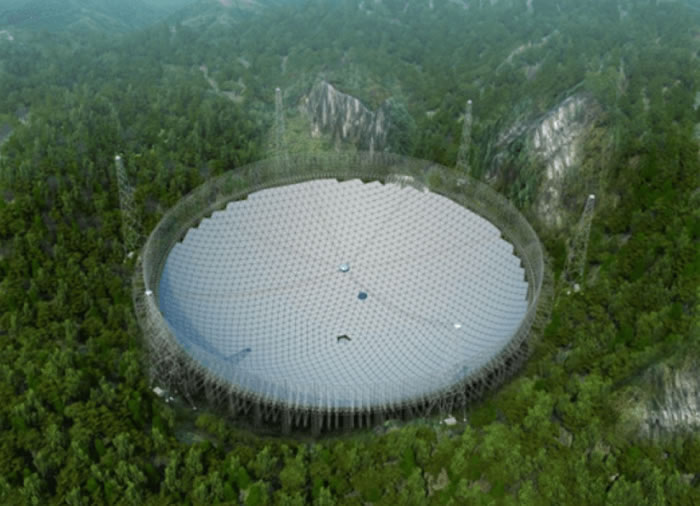
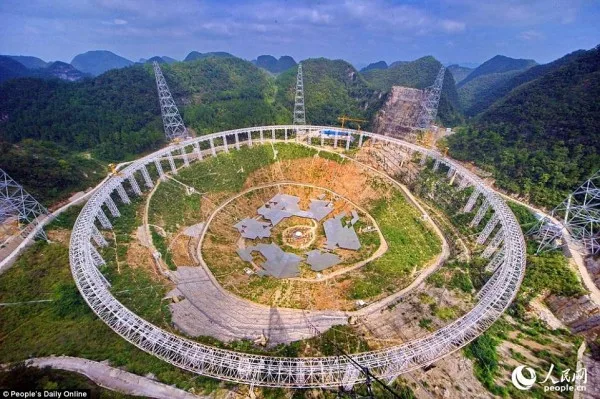
In fact, the real-life version of the 'Red Coast Base' that receives cosmic radio waves is being constructed in the 'Da Wodang' basin of Jinke Village, Kedu Town, Pingtang County, Guizhou Province. The construction project of the world's largest single-dish radio telescope, the 'Sky Eye' (FAST), has now entered the final stage. Once completed, this 500-meter-diameter spherical radio telescope will have a receiving area equivalent to 30 football fields.
On December 26, 2015, Jiang Peng, assistant chief engineer and deputy chief engineer of the reflector system at FAST, revealed at the 2015 Public Science Lecture at the Beijing Planetarium that the "Sky Eye" was built and overcame related technical challenges during construction. It is reported that compared to the American Arecibo Telescope, which was rated as the top 10 human projects of the 20th century, the overall performance of the "Sky Eye" is about 10 times better, and the entire project is expected to be completed by September 2016.
After locating more than 300 depressions, it ultimately ended up in Guizhou's 'Da Wo Dang'
Many people might feel puzzled: why was the 'Sky Eye' located in the geologically complex Guizhou Province? According to Jiang Peng, scientists spent more than ten years finding a suitable 'eye socket' for the 'Sky Eye'. At the 1993 International Union of Radio Science conference, astronomers from ten countries, including China, proposed the initiative to build a new generation of radio 'giant telescopes', aiming to trace back to the primordial universe and answer many difficult questions in astronomy.
At the end of 1995, the Radio 'Big Telescope' China Promotion Committee proposed the concept of the 'Karst Project,' which would utilize a karst depression in Guizhou to build a spherical reflector. After repeated screening, they finally found 'Da Wo Dang' in Kedu Town, Pingtang County — a deep 'eye socket' most suitable for the giant 'Eye of Heaven.' By 2007, the project was officially approved and the site was confirmed. In March 2011, the FAST project began construction in Guizhou.
The site selection took such a long time because the project team was constantly considering how to minimize the excavation volume of the project. Through satellite searches, engineers located more than 300 depressions nationwide. After multiple rounds of screening, they found that the 'Da Wodang' depression in southeastern Guizhou was large and round, which most closely matched the shape of FAST. Additionally, the sparsely populated and tranquil environment around this depression is conducive to reducing electromagnetic interference with FAST. Taking all these factors into account, the 'eye socket' finally settled on 'Da Wodang' in 2007.
Casting a 500-meter-diameter 'big pot' in complex terrain
Similar to the working principle of a typical parabolic satellite antenna, FA ST consists of two main parts: the parabolic surface that reflects signals and the feed that receives signals. The parabolic surface (commonly known as the 'dish') focuses the reflected signals onto a single point. In terms of shape, this parabolic surface is like a huge 'dish.' The only difference is that what it holds are signals sent by 'visitors from outer space.'
This time, the construction site is located in a rugged mountainous area. How to cast a 500-meter-diameter 'big pot' in such complex terrain really puzzled the experts. Various teams offered suggestions and strategies; someone once proposed using a separated technology, with dense rigid supports underneath. However, in the end, the 'cable net' solution was adopted.
According to the 'tensioned cable net' scheme, when FAST is operating, it can follow the rotation of celestial bodies and track and scan radio sources. Scientists first control six steel cables to move the feed cabin across the spherical cap surface, which is 207 meters in diameter and 140-180 meters above the ground. Then, through 2,225 actuators pulling on the cable net, the 4,450 reflector panels on the net are adjusted to focus FAST. In this way, FAST can rotate freely, like a human eye. When the reflector panels receive radio electromagnetic wave signals, they converge the cosmic signals onto the feed cabin.
The assembly of reflective panels relies entirely on the construction team working at heights.
On February 4th last year, the FAST cable net was completed in manufacturing and installation. Now, if you have the chance to visit the project site, you can see a huge 'fishing net' woven from more than 6,000 steel cables. But Jiang Peng said that, while the large net looks spectacular, weaving it was by no means easy.
It is understood that the entire cable net has a total of 2,225 nodes, and the installation span of the cable net is extremely large. The engineering team adopts aerial work methods to lift each cable net and reflector panel, completing the assembly after precise position measurements, with the surface shape control deviation required to be within an RMS of 5mm. To ensure accuracy, experts specially created a constant temperature room to produce the tension cables.
A bigger problem comes from the deformation of steel columns caused by temperature changes; a temperature difference of 50°C means a change of 300 millimeters. Jiang Peng explained that in order to adapt to the undulating terrain, the heights of the steel columns supporting the reflective surface structure vary. To prevent uneven deformation, sliding bearings are added at the connection points between the ring beams and the steel columns. This allows the supporting ring beams to freely expand and contract on the support columns, deforming more evenly.
This is similar to allowing for a buffer for deformation, with a maximum deformation distance of up to 0.47 meters. In this way, the 'Sky Eye' that connects the 'optic nerve' can flexibly adjust its focus. It is worth mentioning that due to deformations caused by its own weight and wind load, the maximum aperture of traditional fully steerable telescopes is generally only 100 meters. The 500-meter aperture 'Sky Eye', adopting a cable-net structure, easily surpasses the 100-meter limit, not only pioneering a new model for constructing giant radio telescopes but also, once operational, will have a sensitivity 3.25 times that of the world’s largest, the Arecibo Observatory in the United States.
After the completion of the 'Sky Eye,' it will search for extraterrestrial intelligent life.
From its conception until now, the nearly completed 'Sky Eye' project has spanned more than 20 years. After it is put into use, in which fields will it showcase its capabilities? Li Di, the chief scientist of the Radio Astronomy Department at the National Astronomical Observatories of the Chinese Academy of Sciences, stated in a media interview that the main arena for the 'Sky Eye' remains astronomy, such as: detecting distant signals and matter in the universe, exploring topics from the origin of the universe to the structure of interstellar matter, searching for faint pulsars and other weak radio sources, and efficiently conducting the search for extraterrestrial intelligent life.
Zheng Xiaonian, Executive Deputy Manager of the FAST Project and Deputy Director of the National Astronomical Observatories, said in a media interview that the completed 'Sky Eye' will have the ability to survey neutral hydrogen in the universe, detect interstellar molecules, observe pulsars, and search for interstellar communication signals. With the help of this keen big eye, humanity has taken another step forward in the search for extraterrestrial civilizations.
In early December last year, Pierrick Martin, an astrophysicist at the National Center for Scientific Research (CNRS) in Toulouse, France, and the Institute of Astrophysics and Planetology, using NASA's Fermi Gamma-ray Space Telescope, discovered the first gamma-ray pulsar in another galaxy 163,000 light-years away from Earth, setting a new record for the brightest known gamma-ray pulsar.
Detecting extragalactic pulsars is itself one of FAST's founding objectives. According to calculations by the National Astronomical Observatories of the Chinese Academy of Sciences, the deformation of the 'Sky Eye' cable net occurs about more than one million times, with a service life of 30 years. Li Di is very confident in FAST's future performance, saying, 'Once completed, FAST will maintain a world-class status for the next 20 years.'
Six 100-meter-high support towers
By controlling six steel cables, the feed cabin is moved on the spherical cap with a diameter of 207 meters at a height of 140–180 meters above the ground.
The feed cabin weighs about 30 tons (including the star-shaped frame, Stewart platform, cabin cover, and other equipment)
By pulling the cable network with 2,225 actuators, driving the 4,450 reflector panels on the net to focus the 'Sky Eye'
How the 'Sky Eye' Avoids Wind, Rain, and Lightning
"The 'Sky Eye' is built in the 'tiankeng' of Guizhou. How does such a gigantic structure avoid wind, rain, and lightning?"
The factor of rainfall was already considered by scientists when selecting the site. Jiang Peng stated that it is not just because the shape meets the requirements that the 'eye socket' location is determined to be in Guizhou. The more complex part comes later; during the field exploration stage, the project team needs to conduct an in-depth geological assessment of the low-lying area.
"The entire depression has at least 600 holes, it has practically become a giant sieve." The mature underground river network unique to the karst landforms, along with the numerous caves, brought a pleasant surprise: this gave the 'Sky Eye' a natural drainage function. Once it rains, water quickly seeps underground, preventing water accumulation at the telescope site and damage to electronic equipment.
As of December last year, the installation of the reflective panels was more than halfway complete, and the prototype of the 'Sky Eye' had begun to take shape: a huge valley was filled with a hemispherical 'net' woven from steel cables, about half of which was covered with silver reflective panels, and against the backdrop of green mountains on all sides, it looked like a dazzling mirror.
Jiang Peng reminded that upon close observation, it can be seen that the seemingly smooth aluminum alloy active reflection panels are actually covered with countless holes. These densely packed small holes are designed to reduce wind load, thereby mitigating the impact of wind speeds exceeding 4-5 meters per second on the 'Tianyan' detection work.
At the same time, the holes can also improve light transmission, allowing the plants on the antenna surface to grow and preventing soil erosion. "Soil and water conservation is very important; otherwise, once soil erosion becomes serious, the low-lying areas will turn into mud ponds when it rains," said Jiang Peng. He noted that while greening is beneficial, if the rampant vines climb onto the reflector panels, they can also interfere with detection work. Currently, the project team regularly cleans up overgrown weeds together with the workers.
In addition, the harsh local climate conditions in Guizhou are also a concern for many people. Can the 'Sky Eye' withstand extreme rains, snow, hail, and thunderstorms? Regarding this, Jiang Peng stated that the 'Sky Eye' has made corresponding preparations. For example, to prevent lightning strikes, all metal equipment is grounded as a whole, so any lightning can dissipate quickly. 'Moreover, according to experience, extreme weather only accounts for a very small proportion of the year (usually around 10 days), so the impact will not be too significant.'
The Past and Present of Radio Telescopes
The development of astronomical telescopes has gone through an evolution from small to large apertures and from short to long. At present, the development of astronomical telescopes mainly focuses on two directions: one is 'going to space,' and the other is 'occupying land.' Due to the influence of the Earth's atmosphere, most short-wavelength ultraviolet and X-rays cannot be observed, so telescopes can only be sent into outer space using space technology. Examples of this include the Kepler Telescope and the Hubble Space Telescope. The term 'occupying land' refers to ground-based telescopes, such as China's currently under-construction radio telescope, FAST.
As a type of astronomical telescope, the development of radio telescopes also represents the progress of humanity in exploring the universe. It was not until 1873, when Maxwell's work "A Treatise on Electricity and Magnetism" was published, systematically and comprehensively expounding the theory of electromagnetic fields, that people suddenly realized: light is also a kind of electromagnetic wave, and within the long spectrum of electromagnetic waves, visible light occupies only a very small part.
Entering the 20th century, scientists discovered while measuring the height of the Earth's ionosphere that electromagnetic waves with wavelengths shorter than 60 meters almost entirely do not return when passing through the ionosphere. This phenomenon sparked researchers' imagination: since electromagnetic waves shorter than 60 meters can shoot toward space from Earth without any obstruction, conversely, similar electromagnetic waves from space might also be able to penetrate the atmosphere and reach Earth.
Thus, the curtain for human observation of cosmic radio waves was lifted. In 1931, the Bell Laboratories in the United States received radio waves from the center of the Milky Way using an antenna array. From then on, radio astronomy was officially born. In the following decades, pulsars, quasars, cosmic microwave background radiation, and interstellar organic molecules successively "emerged."
Over the 80-plus years since its birth, radio telescopes themselves have also experienced rapid development. In 1955, the United Kingdom built the movable 76-meter-diameter Lovell Radio Telescope at the Jodrell Bank Observatory in Manchester. In 1972, the world's largest fully steerable radio telescope at the time, the Bonn Telescope in Germany, was completed, with a parabolic antenna diameter reaching 100 meters.
In 1963, the Arecibo Radio Telescope was completed on the island of Puerto Rico in Central America, initially with a diameter of 305 meters (later expanded to 350 meters). The aging Arecibo still remains the largest single-dish radio telescope in the world ever constructed.
In 1974, to celebrate the completion of its upgrade, the Arecibo Telescope sent a signal composed of 1,679 binary digits to the globular cluster M13, located 25,000 light-years away from Earth; this signal is known as the Arecibo Message. At the bottom of the pattern, there was also an icon of the "solar cooker" showing how humans receive and transmit radio signals.
Currently, besides China's ongoing "Sky Eye" FAST project, the SKA project, fully named the "Square Kilometre Array Radio Telescope," is expected to commence in two years. Dai Shi, a young astronomer who graduated from the Department of Astronomy at Peking University and is now conducting postdoctoral research at the Astronomy and Space Science Institute (CASS) of the Australian Commonwealth Scientific and Industrial Research Organization, is a member of the SKA project.
According to him, the SKA will consist of thousands of smaller antennas built in Australia and South Africa, expected to be operational around 2030, and is anticipated to become the largest telescope in human history.