

 Inquire Now


More than a splitter: protection for every RS-485 branch
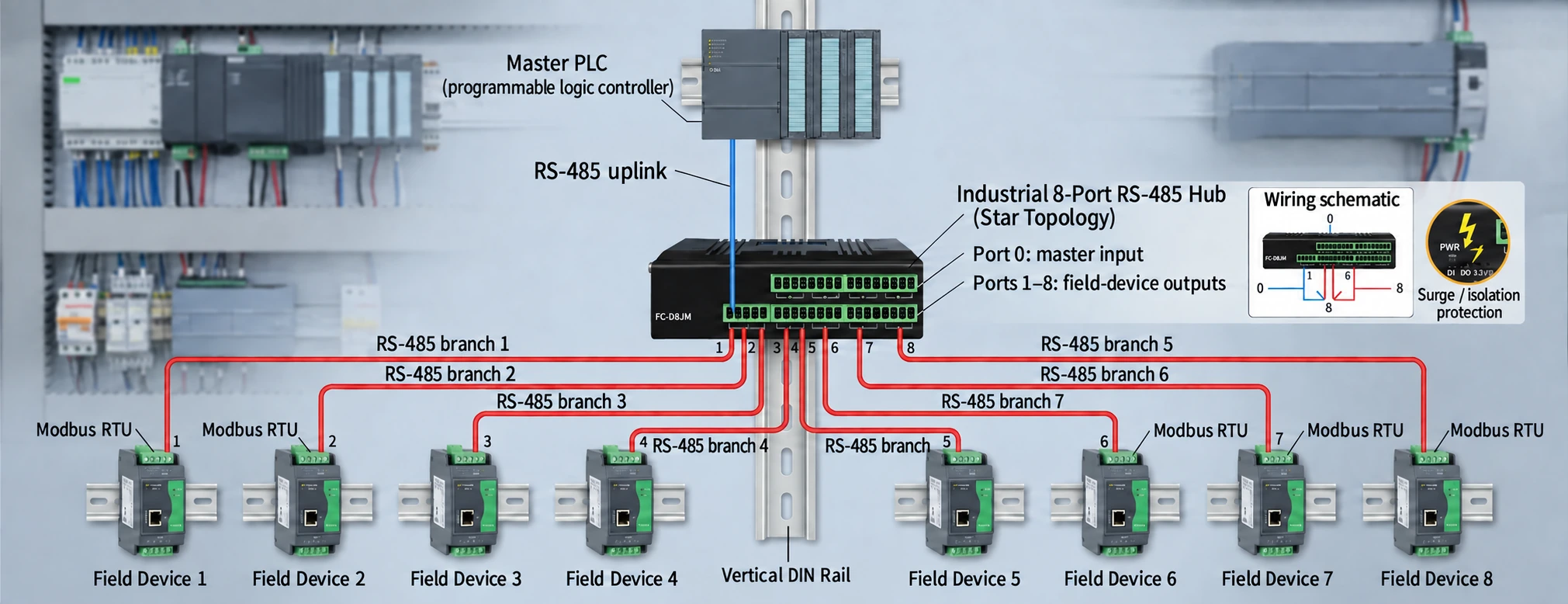
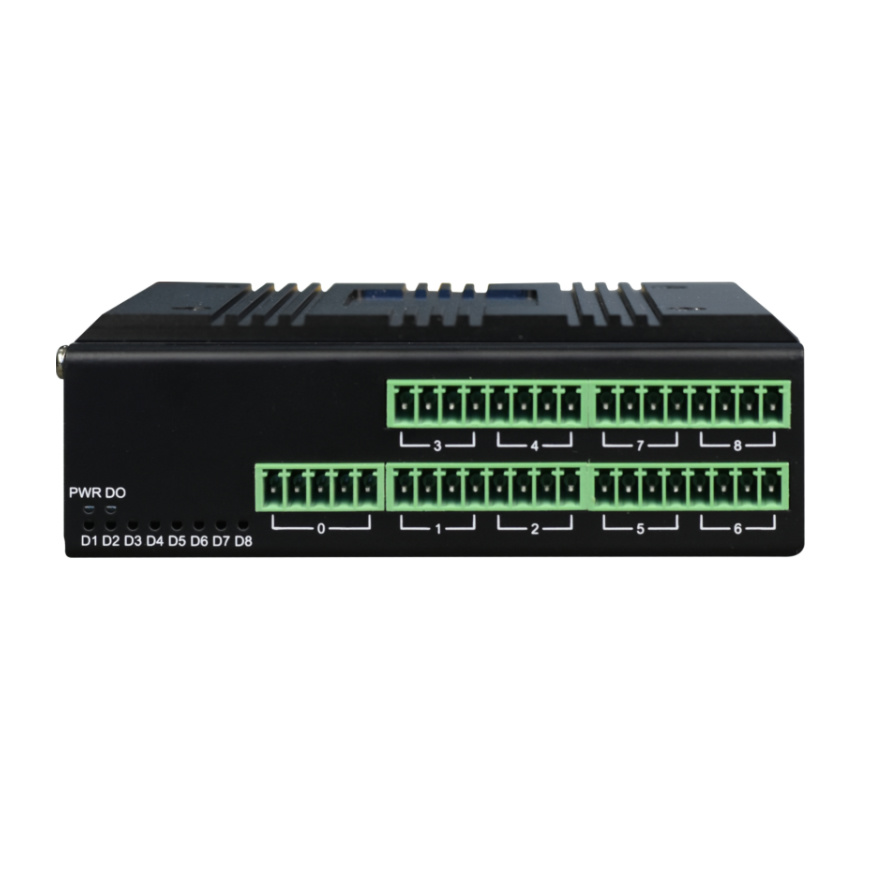
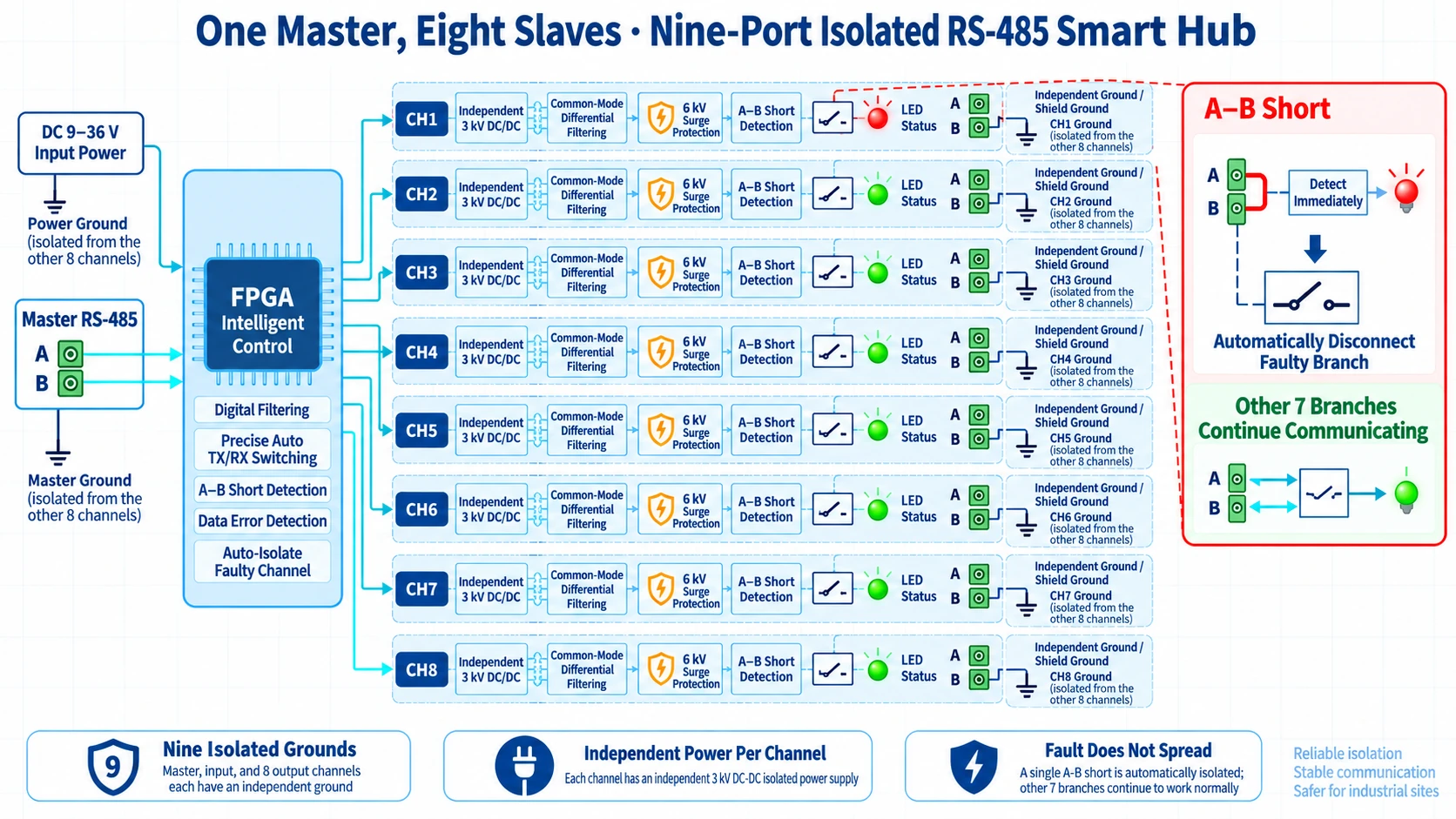
The FC-D8JM industrial DIN-rail smart RS-485 hub distributes one upstream serial connection to eight field branches. The master port, eight downstream ports and power ground are isolated from one another. Each downstream channel has its own isolated 3 kV DC/DC supply, ground and shield connection, surge protection, status LED and A–B short-circuit detection. If one branch fails, the hub identifies and isolates that channel while the other seven remain available for communication.
Independent isolation matters
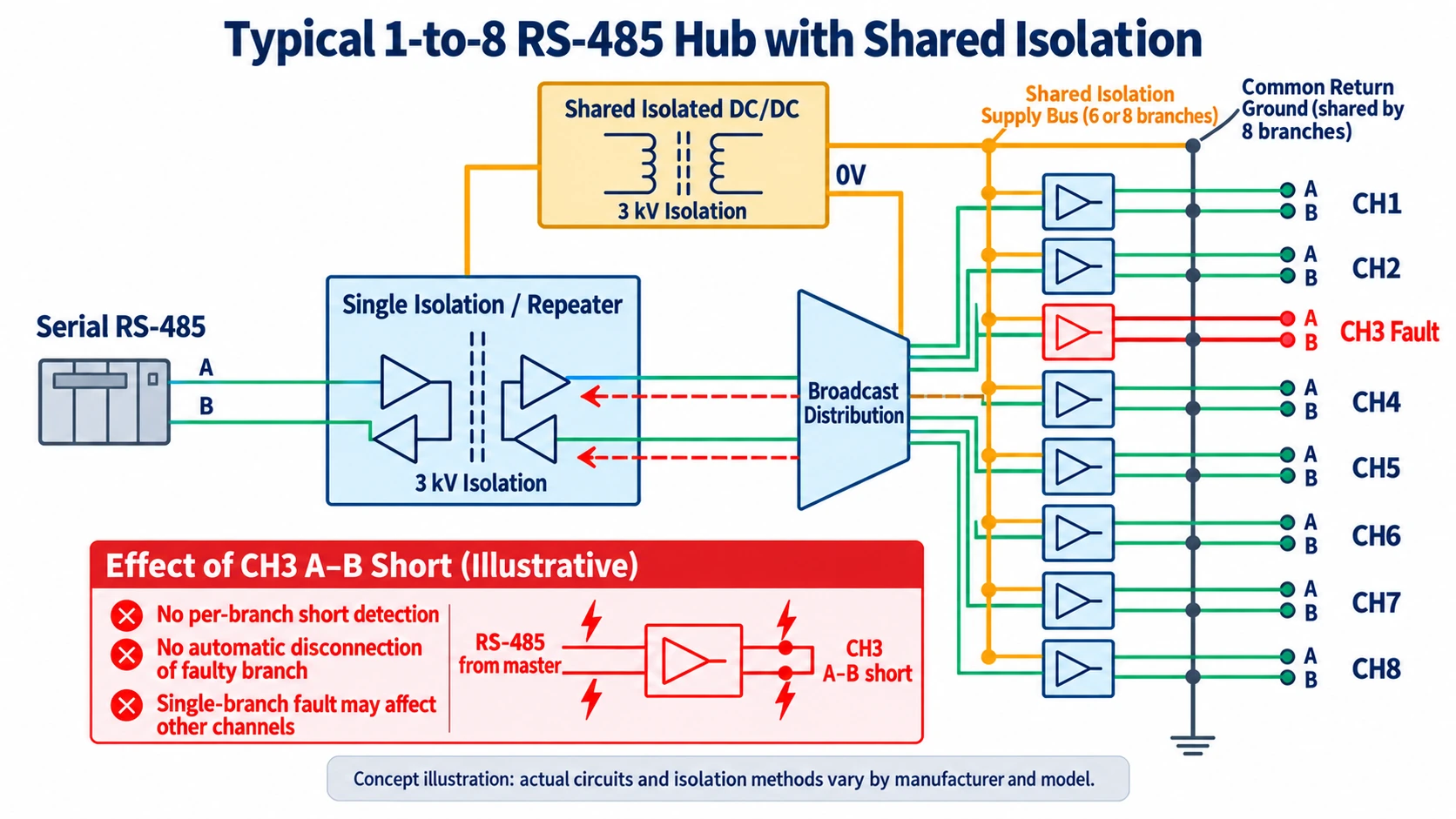
Two hubs may both be described as “isolated” while using very different internal arrangements. In a shared architecture, several downstream ports can use a common isolated power supply and return path. A fault on one line may then affect other branches through that shared path. On the FC-D8JM, each of the eight field ports has its own isolated supply, ground and fault-handling circuit. The master-side ground is also separated from the downstream grounds. This helps reduce the effects of ground potential differences between buildings, workshops or equipment cabinets.
The comparison below explains the selection principle; it does not describe a particular competing manufacturer. Always confirm the isolation diagram and measured performance of a proposed model.
Find the failed branch at the cabinet
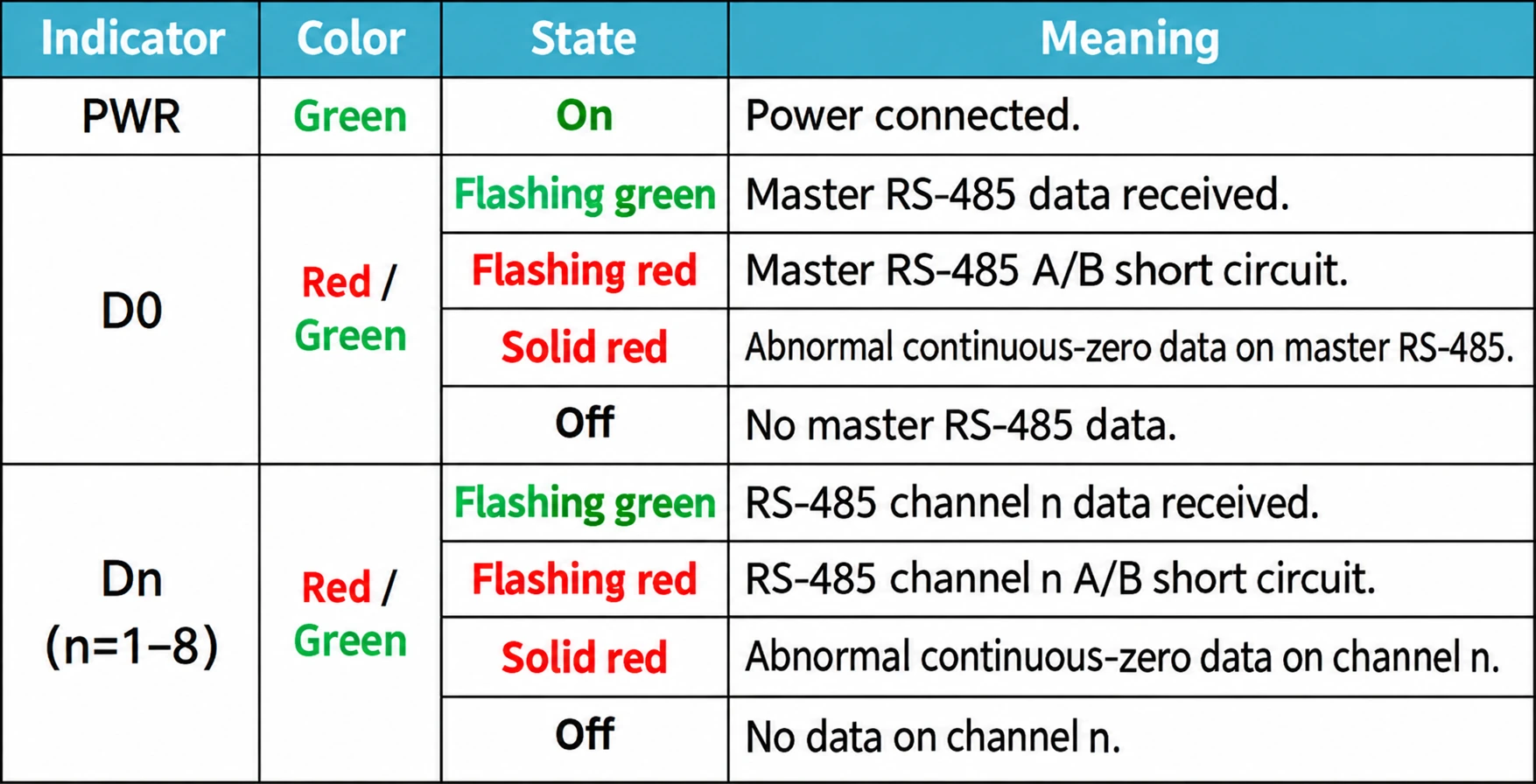
Stray copper strands at a terminal, moisture in a junction box, crushed insulation or a failed transceiver can short the A and B conductors. On a conventional shared bus, that may appear as timeouts across the entire network, leaving technicians to disconnect cables one by one. The FC-D8JM monitors the A/B condition of each field branch and also detects certain abnormal data conditions. It lights the corresponding channel indicator and isolates the affected line. Technicians can focus on an identified port while unaffected areas continue operating.
The hub also combines common-mode inductive differential filtering with FPGA digital filtering to reduce line spikes and high-frequency interference. Its FPGA logic produces RS-485 transmit/receive enable timing from the data being sent, supporting a range of baud rates and frame lengths. These functions are designed for industrial installations with many serial devices, long cable runs and challenging electrical environments.