


Before comparing fiber media converter prices, turn both quotations into the same deliverable link: identify the units, optics at both ends, power supplies, patch cords, installation and acceptance. A cheaper bare unit is not necessarily a cheaper solution, while a more expensive brand does not by itself prove suitability. This article avoids a universal price list that will become outdated. Instead, it explains which configurations create costs and how to determine whether spending addresses necessary conditions.
1. Are you buying a complete device or a module?
An Ethernet fiber media converter connects the conditions for copper electrical signaling and optical-fiber signaling. In transmission, the copper port receives data, internal circuits handle the interface signals and drive the optical transmitter; reception reverses the process. A pluggable SFP is normally an optical transmit/receive component installed in a host, not a complete unit with RJ45, power and mounting structure. A module price therefore cannot be directly compared with a powered converter package.
Clarify what the quantity means. A field link normally involves equipment at both ends, but the peer may already be a switch with compatible optics, making another converter unnecessary. Draw the terminals, copper cables, converters, fiber, peer interface and power locations. This establishes whether the quote needs one unit, two units or hosts plus modules. Buying extra equipment is not automatically safer.
2. Why the same Gigabit label can mean different configurations
Gigabit describes nominal port speed, not every optical or processing condition. Specify copper and optical speeds separately, permitted rate conversion and required frame lengths. Fixed and pluggable optics have different price structures. Fixed optics normally ship as part of the unit; with pluggable optics, establish whether supported modules are included, whether both ends match and whether replacement modules will remain available.
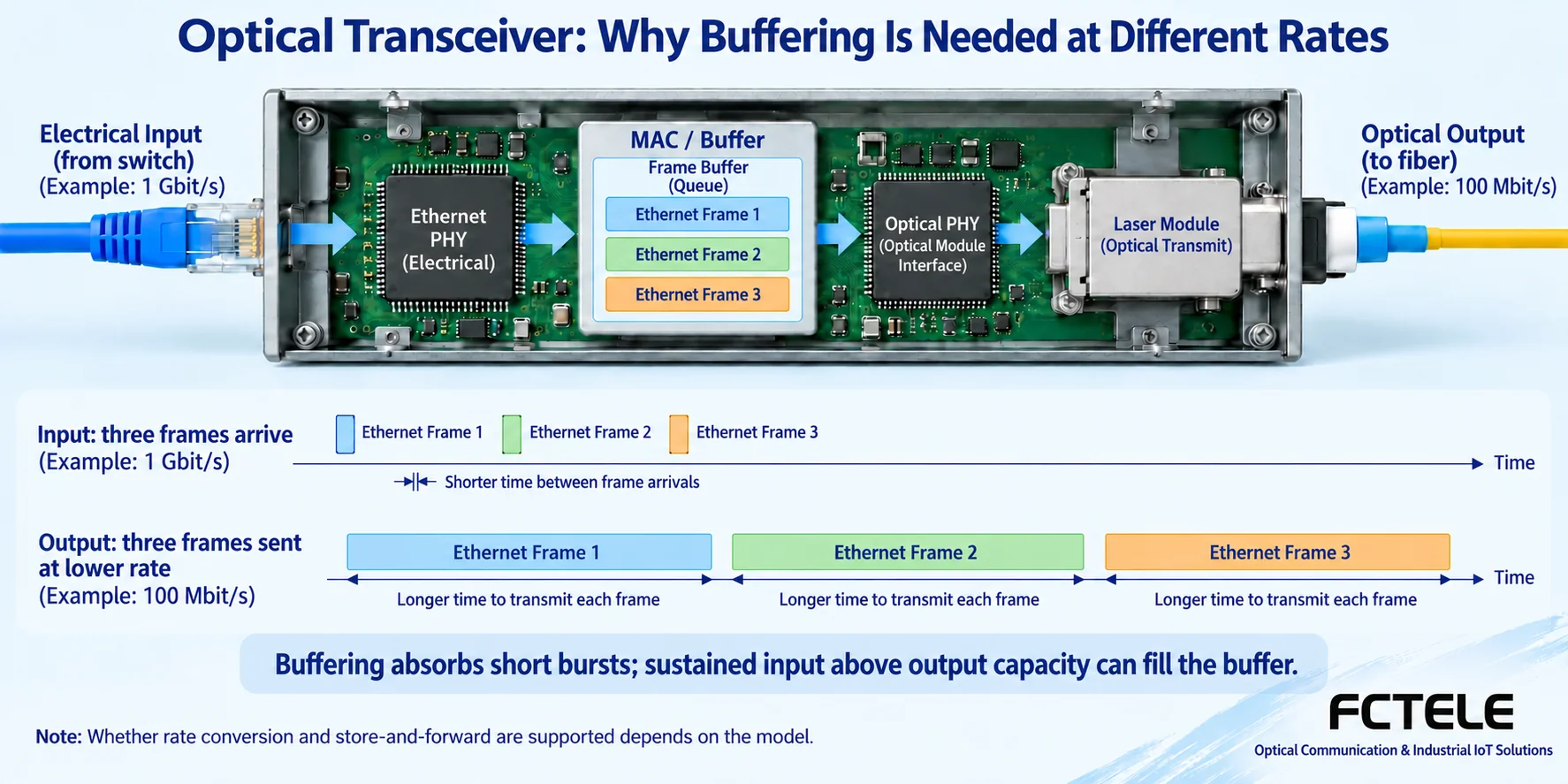
The PHY is the physical-layer circuit handling interface electrical signals. Some architectures mainly convert media at the same rate, while others process frames with finite buffers and support particular rate combinations. An Ethernet frame is a formatted block of data. A device supporting the relevant mode receives and checks it before transmission. Buffers queue a temporarily faster input, but eventually fill if output capacity remains below input traffic. Built-in buffering is not a paid guarantee against all loss, and adaptive copper speed does not imply arbitrary optical rates.
3. Distance affects optics, but longer reach is not always better value
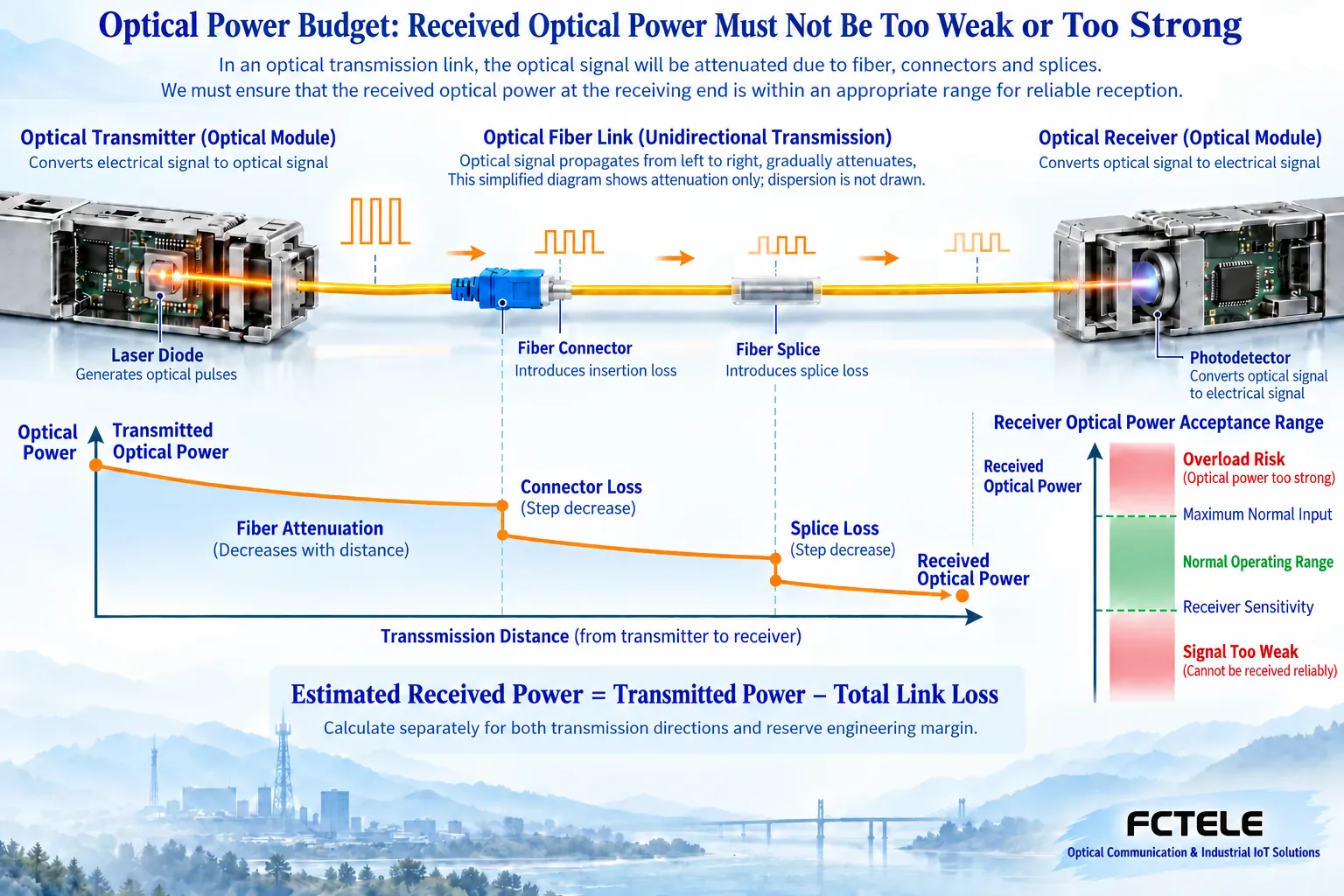
Long-reach pricing reflects transmitter/receiver requirements and optical components, but rated distance is only one selection condition. Fiber, connectors and splices all introduce losses. Transmit conditions and path loss determine expected arriving power, which must remain inside the receiver window. Too little light can prevent reliable reception; too much can exceed maximum input. Do not automatically buy the highest-power or longest-reach version for a short link.
Check both directions separately. Duplex fiber connects local TX to remote RX; single-fiber bidirectional devices require complementary wavelength pairs. Single-/multimode fiber, connectors, available cores and existing peers all affect configuration. Quotes using different fiber types, core counts or reach conditions deliver different solutions rather than merely different brands. Fill in missing parameters before comparison; the same distance label cannot prove compatibility.
4. Total ownership cost includes installation, downtime and maintenance
Total cost of ownership covers purchase, deployment and maintenance rather than unit price multiplied by quantity. Modules, power adapters, jumpers, distribution panels, brackets, terminations, cabinet space and acceptance work may need separate budgeting. List materials supplied by the installer and accessories supplied by the vendor. A low quotation may simply omit part of the delivery scope.
At unattended sites, account for replacement visits and travel. Available status readings, documented alarms, suitable power and compatible spare availability influence diagnosis and recovery. Wide-temperature operation, redundant power and management have value only when the actual model supports them and the site needs them. Adding every option first and calling the resulting high price good value is not a sound comparison.
An ordinary equipment room does not necessarily need incompatible high-speed equipment for a possible future requirement. Upgrades involve both endpoints, modules, fiber and traffic needs. Raising nominal converter speed alone leaves older peers or fiber as potential limits. Conversely, a maintainable compatible system that already meets service and environmental needs may be more reasonable than indiscriminate replacement.
5. Request genuinely comparable quotations
Provide a topology and conditions: service type, endpoint copper/optical interfaces, target speed, fiber type and length, core count, connectors, power, mounting location and existing models. Ask suppliers to mark each requirement supported, optional or unsupported, and specify models, accessories, quantities, taxes, shipping, lead time, warranty scope and quote validity. Use the actual current quote rather than a price generalization from an article written years ago.
The FCTEL B-series single-port Gigabit converter page lists single-/multimode and single-/dual-fiber options plus external/internal power forms. Use these to identify optical and power versions in the quote. Backup-power wording for an internal-power version cannot be applied automatically to an external-adapter version. Buffers and longer-frame support are useful checks but do not replace testing or imply every industrial management feature. Confirm distance and speed wording against the ordered version where page sections differ.
6. Judge value through acceptance, not just indicators
Lighting up establishes only some connection conditions, not stable service. Test first on a suitable short link, then measure both receiving directions on the installed fiber and run the actual terminals and services. Cover required frame lengths, peaks and bidirectional traffic. Record errors, losses, delay changes and operating conditions. Load tests on production networks need a maintenance window or isolated setup so that acceptance does not disrupt active service.
Record whether link or power failures recover as expected, retaining device and module models, cable identifiers, configuration versions and power arrangements. Put support scope and spare-delivery terms in the handover requirements rather than inferring response times from brand recognition. Compare maintainable solutions meeting the same conditions and acceptance tests. A cheaper device that fails those conditions does not belong in the same price comparison.
Translated from the Chinese technical article. Source first published: 2023-11-03. Source last revised: 2026-10-13T16:50:29+08:00. Read the Chinese source
