

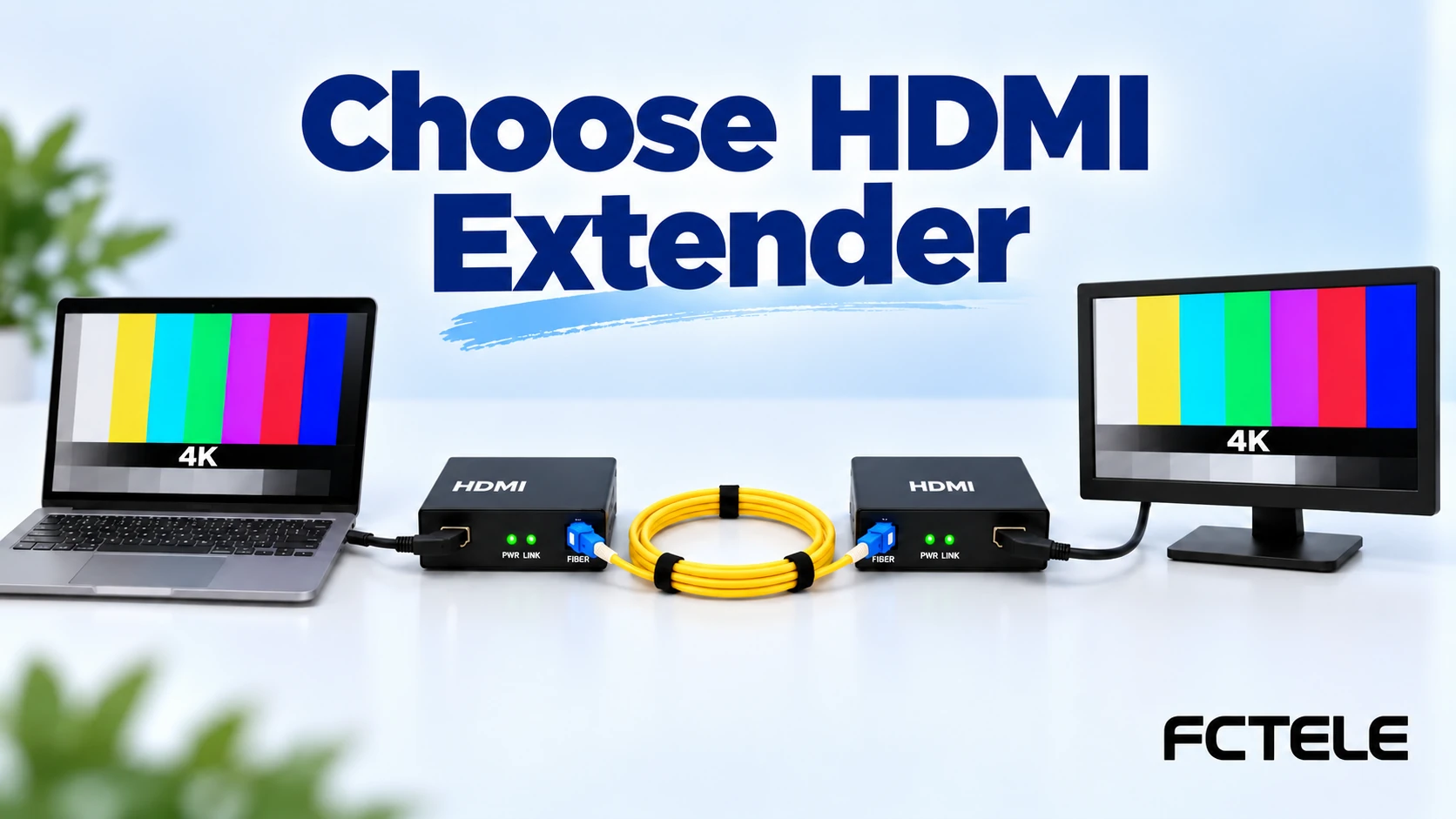
Choosing HDMI Fiber Extenders: Video Modes and Optical Budget
Specify HDMI resolution, refresh, chroma, bit depth and auxiliary services. Check EDID, HDCP and the receiver power window with the actual endpoint pair.
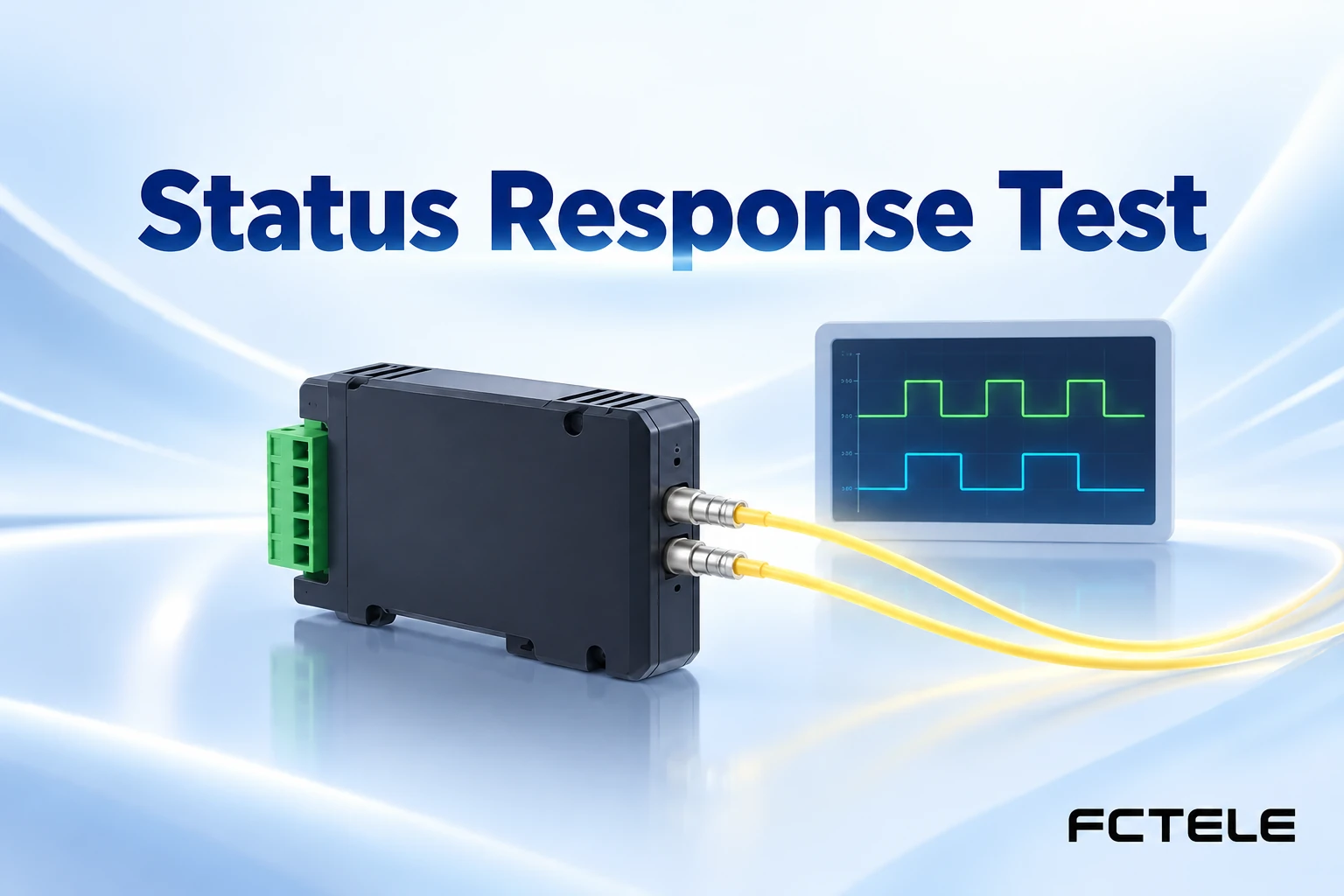
Testing Contact-over-Fiber Links: Timing, Pulses and Recovery
Test contact-over-fiber channel mapping, input-to-output response, pulse recognition and loss behavior. Optical backup switching is a separate measurement.
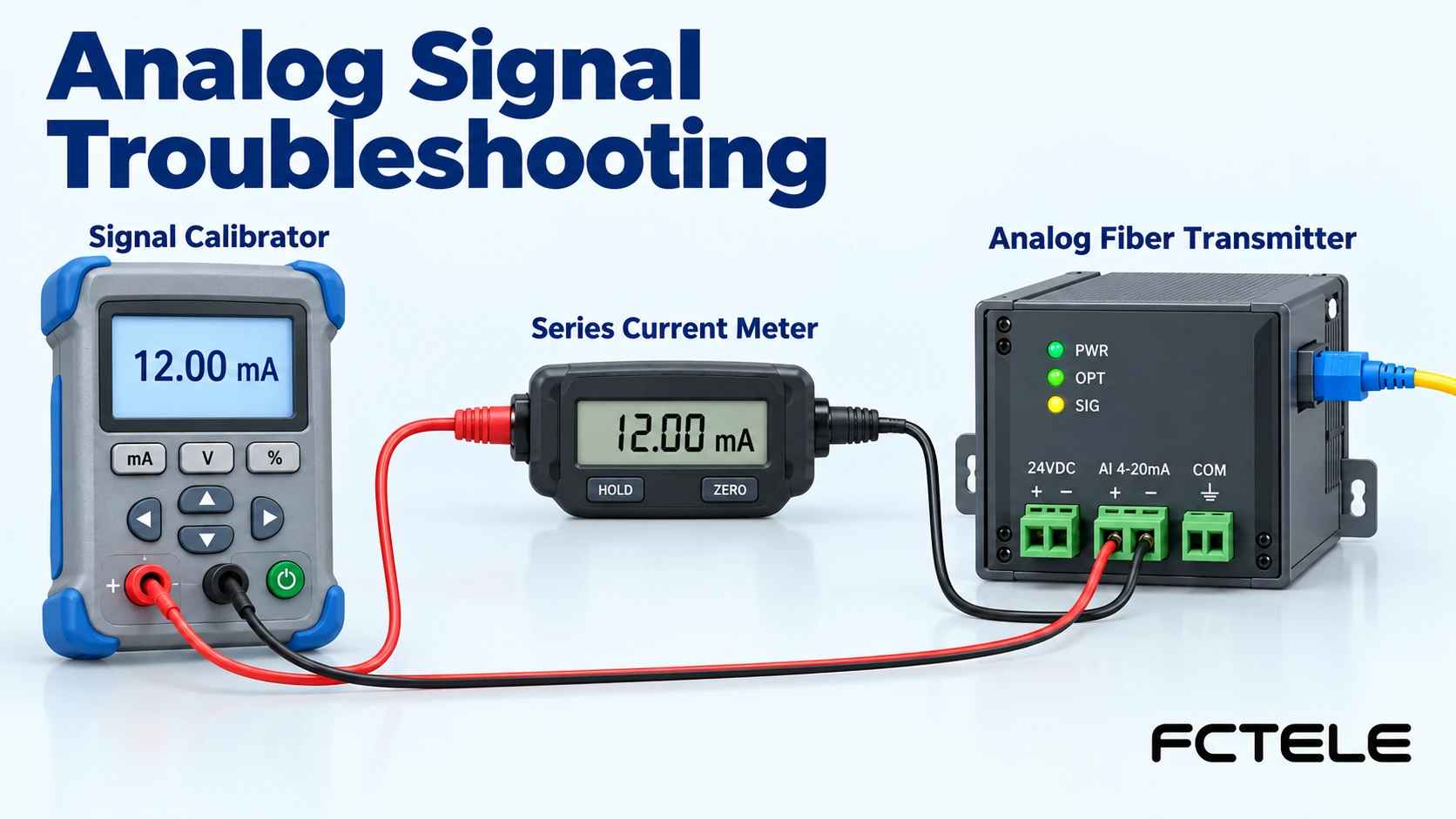
Analog Fiber Link Troubleshooting: Readings, Errors and Hold
Locate analog fiber faults using known input points, output load checks and PLC scaling, while distinguishing a held output from a fresh measurement.
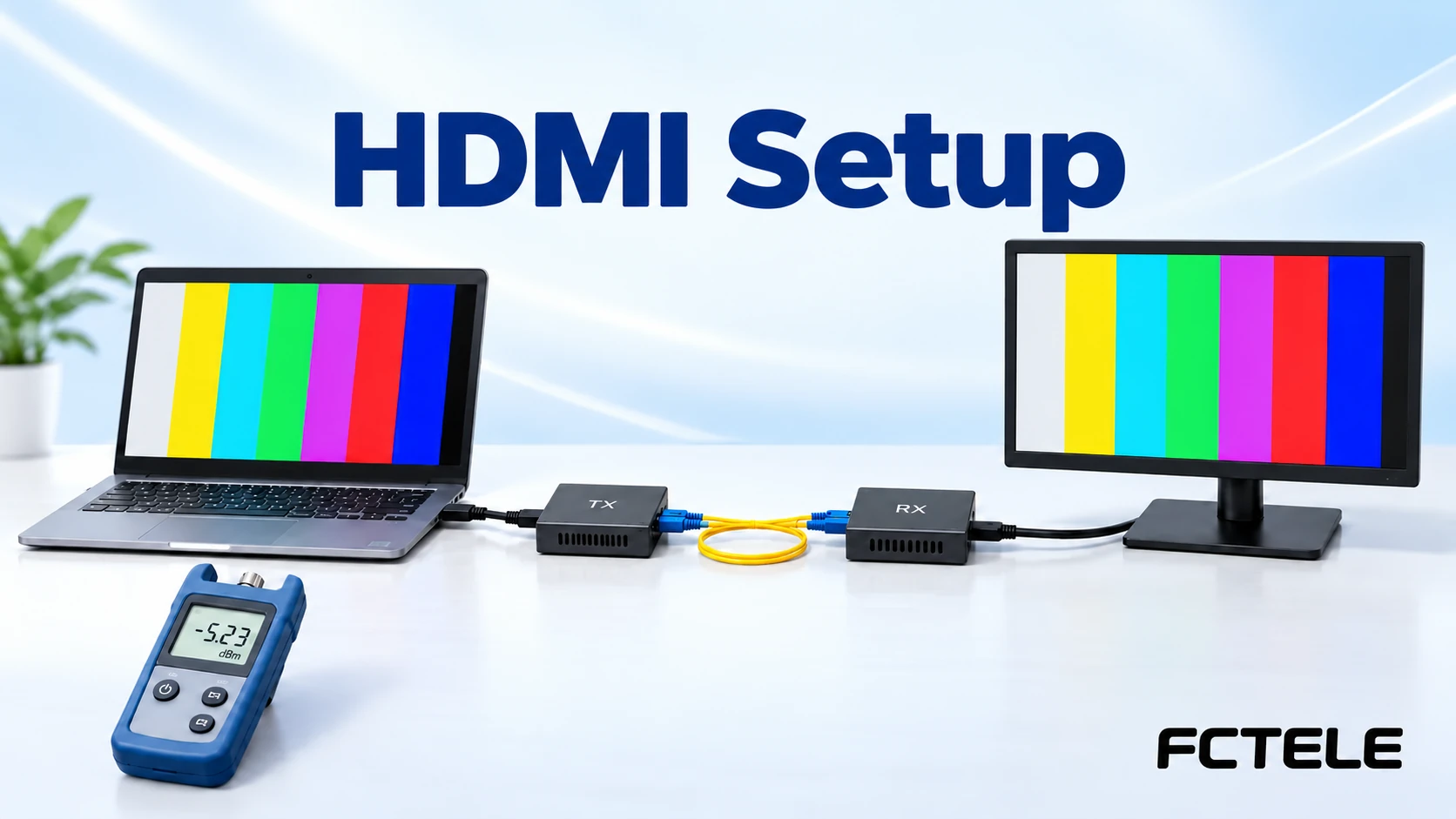
Installing HDMI Fiber Extenders: Baselines and Commissioning
Commission HDMI fiber links in direct, short-fiber and installed-line stages, preserving the target mode and checking each auxiliary service independently.
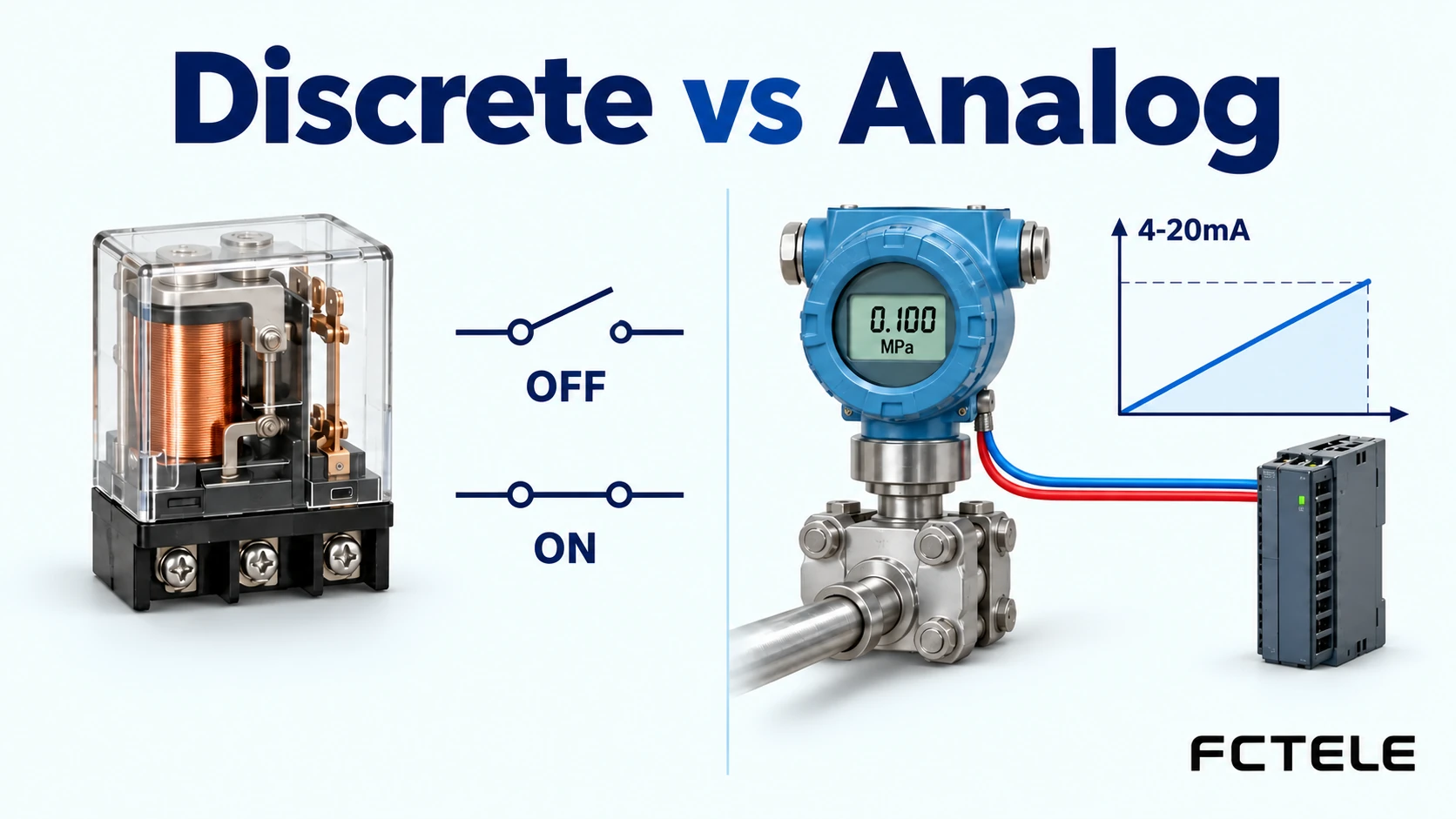
Discrete vs Analog Fiber I/O: DI/DO, AI/AO and Signal Scaling
Choose DI/DO or AI/AO by the required information, then verify electrical input form, output direction, analog scaling and complete channel mapping.
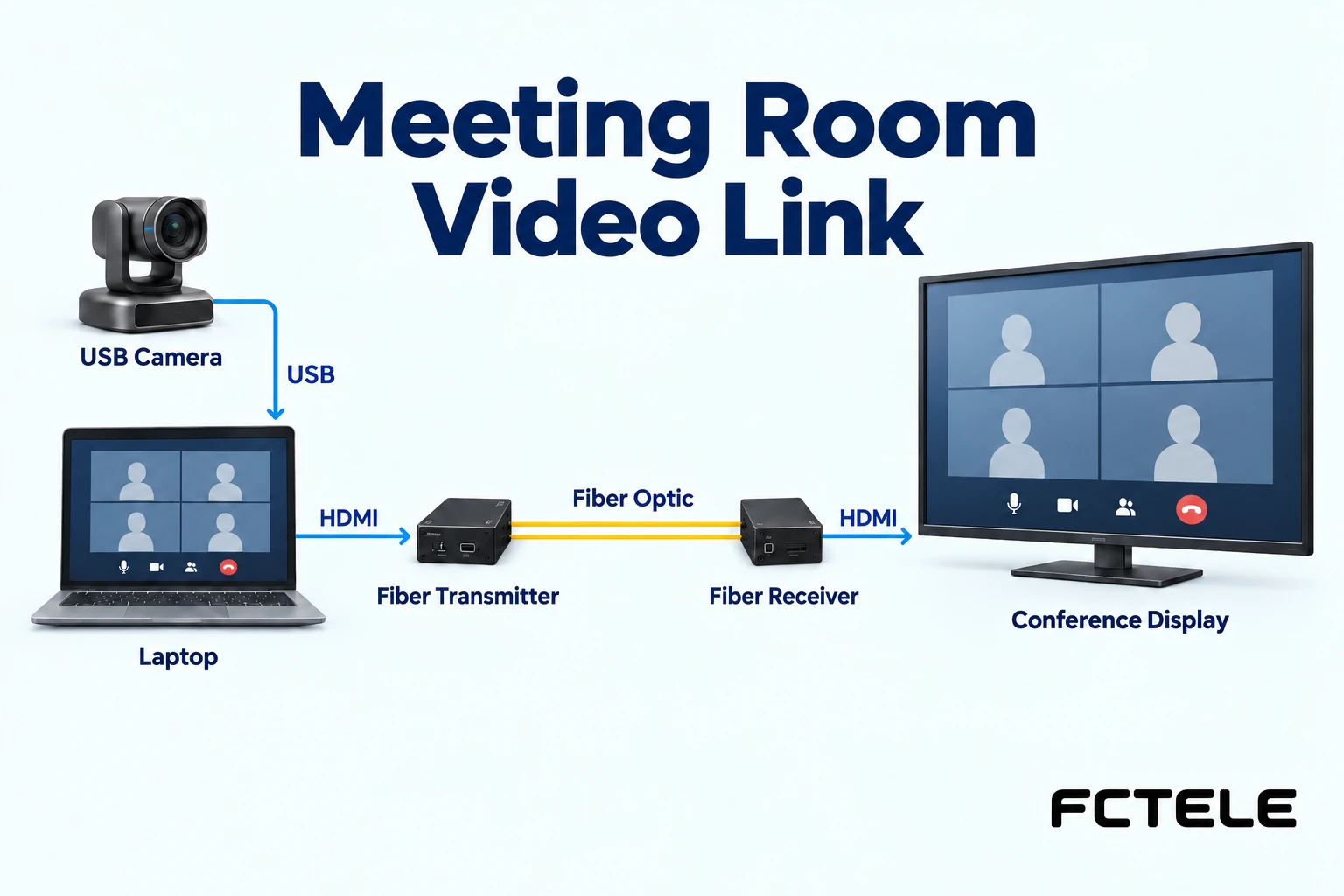
Conference Room Links: HDMI Display, USB Capture and IP Calls
Plan HDMI display, USB camera capture and IP conferencing as separate paths, then verify sound, control and concurrent operation in a complete meeting.
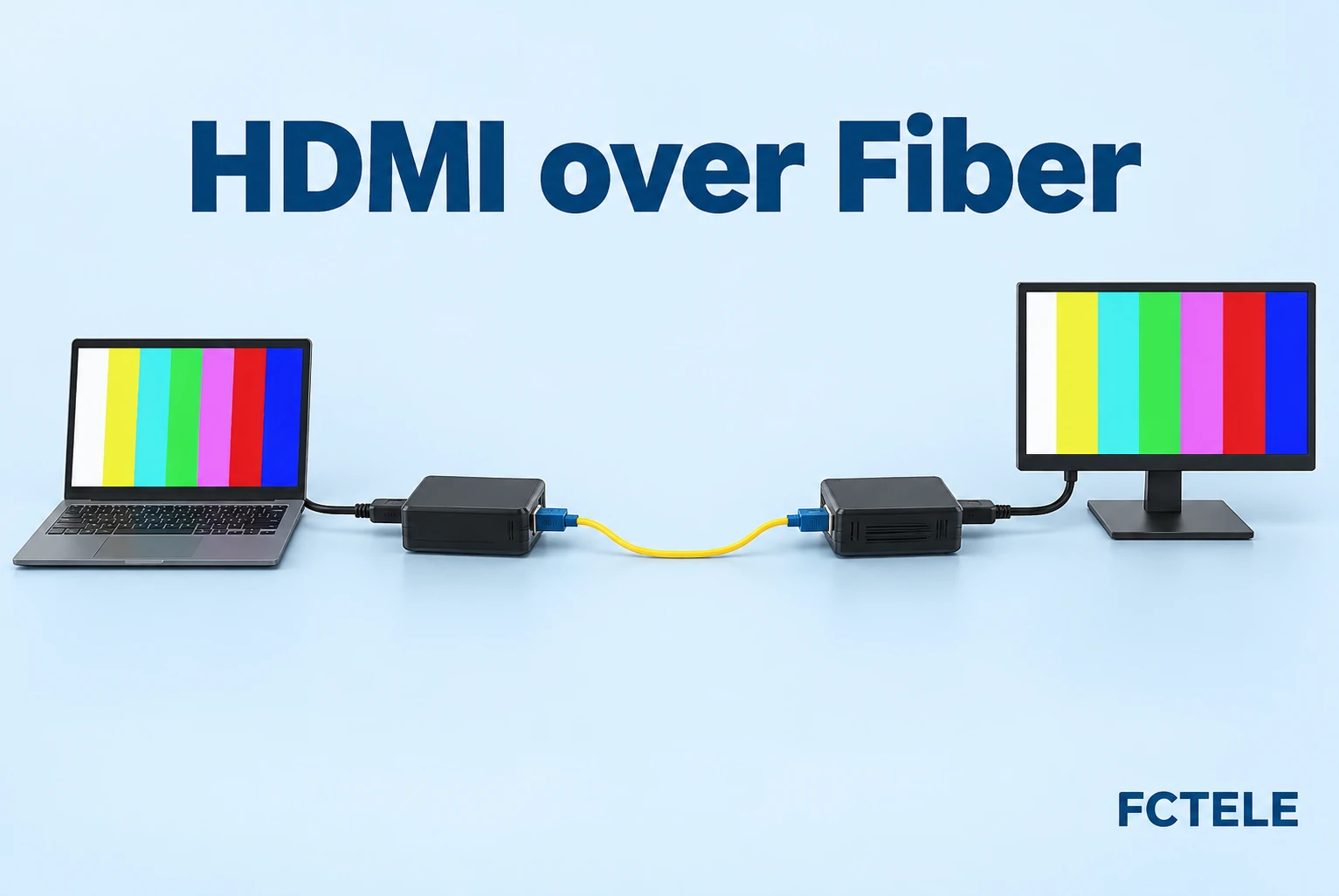
How HDMI Fiber Extenders Work: Video, EDID and HDCP
Trace digital HDMI electrical-to-optical conversion, returned display capabilities and content authentication without assuming compression or reverse video.
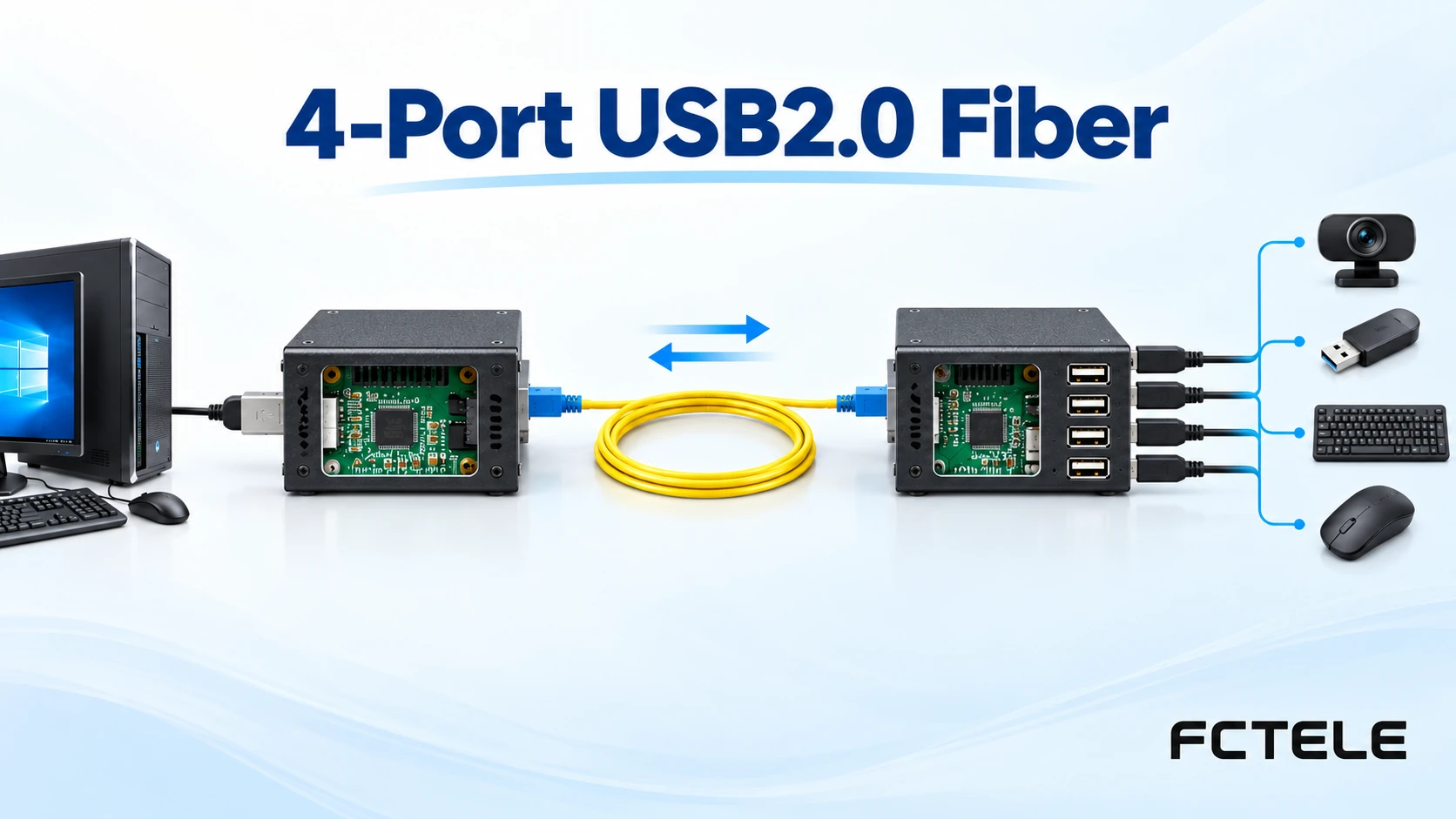
Choosing Four-Port USB2.0 Fiber Extenders: Bandwidth and Power
Size four-port USB2.0 extension around one host, concurrent transfer demand, individual port limits and the remote power budget for the exact peripherals.
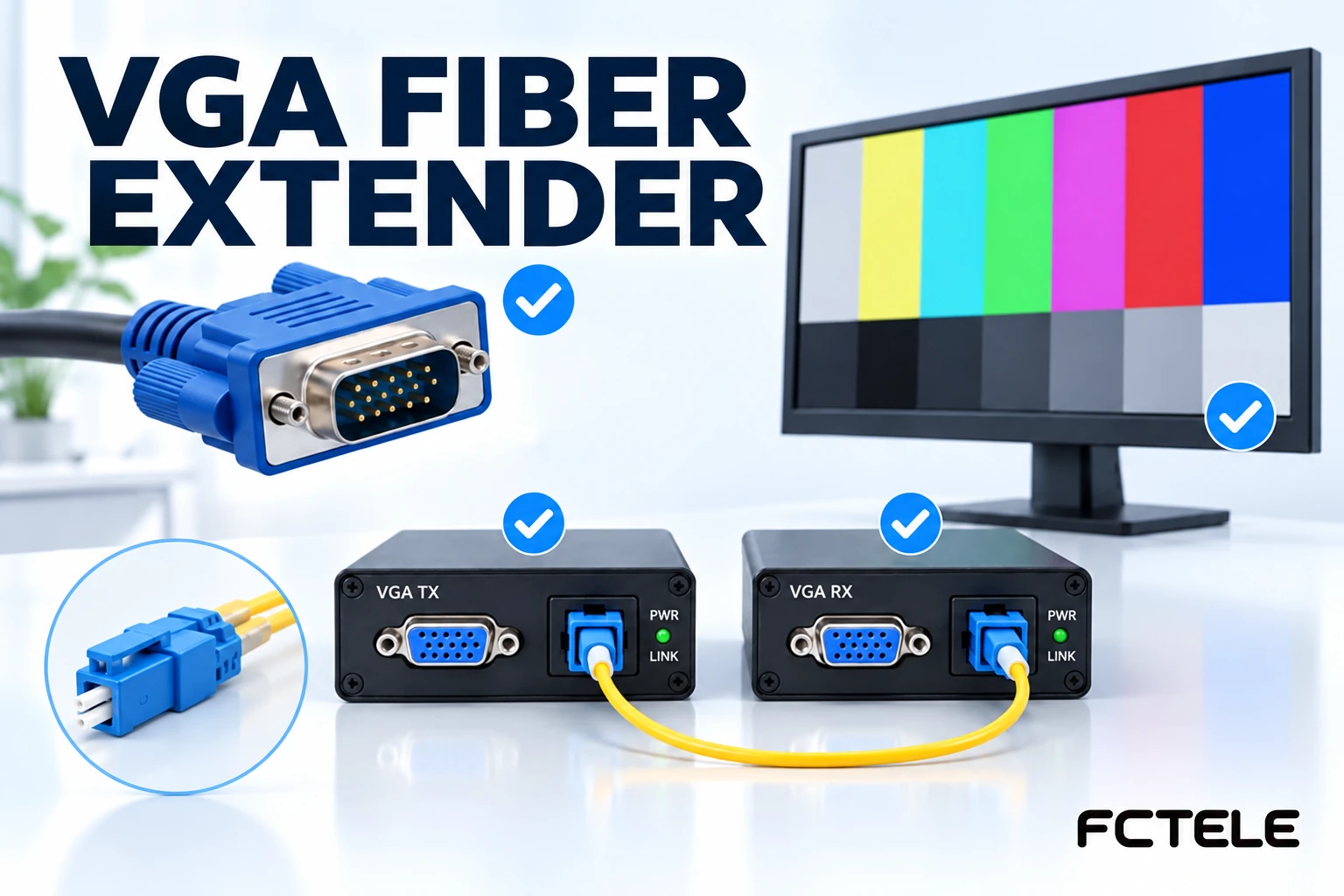
Choosing VGA Fiber Extenders: Timing, Optical Budget and Interfaces
Check common VGA timing, display identification, optical receive conditions and required auxiliary interfaces before selecting a matched extension pair.
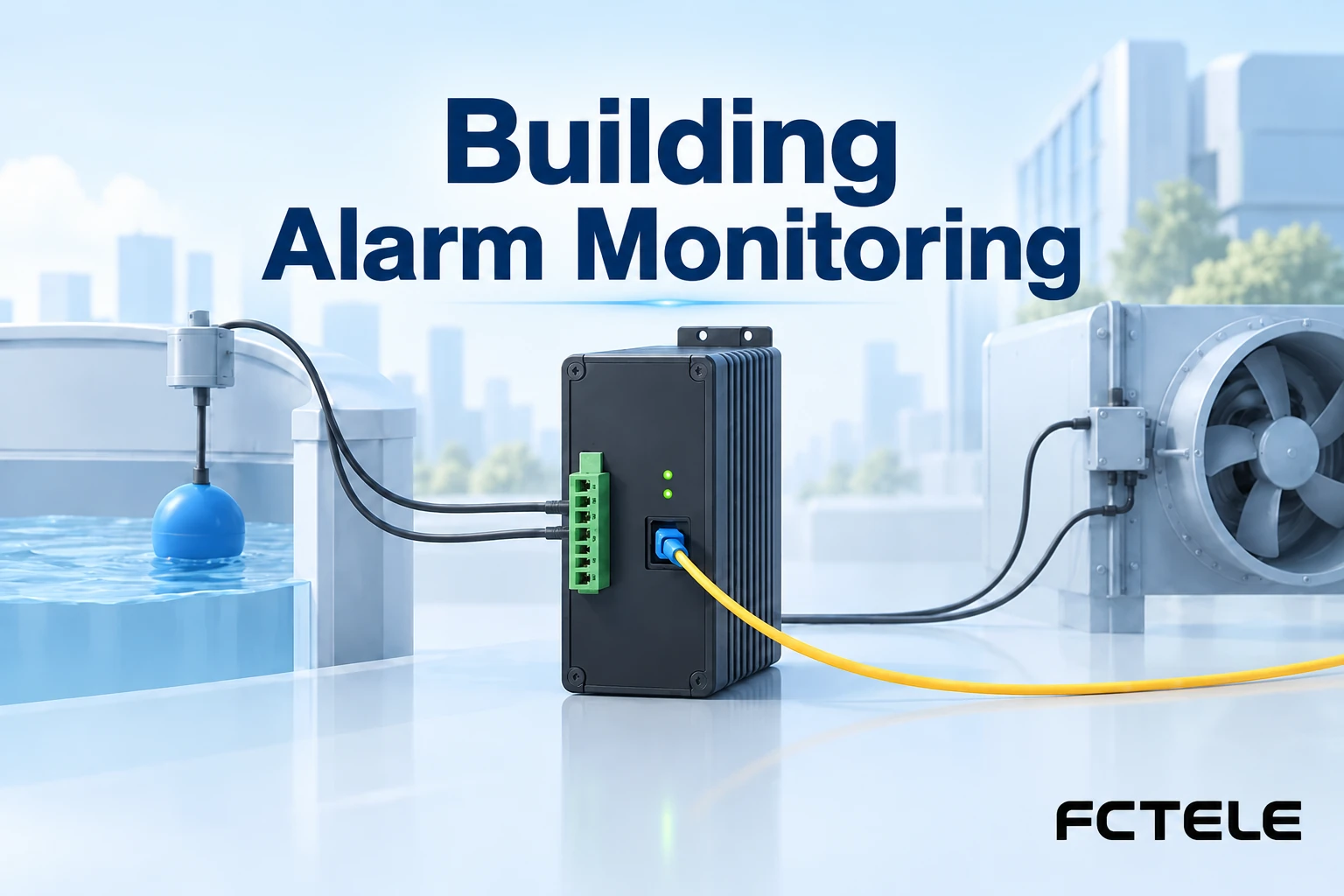
Contact-over-Fiber Links for Building Alarms and Equipment Status
Plan building contact links with clear point meanings, supported aggregation and separate communication-fault reporting, then verify commands and feedback.
